|
 |
 | | | | | | ||||||||||||||||||||||||||||||||||||||||||||||||||||||||||||||||||||||||||||||||||||||||||||||||||||||||||||||||||||||||||||||||||||||||||||||||||||||||||||||||||||||||||||||||||||
| | | You are in: Middle East | ||||||||||||||||||||||||||||||||||||||||||||||||||||||||||||||||||||||||||||||||||||||||||||||||||||||||||||||||||||||||||||||||||||||||||||||||||||||||||||||||||||||||||||||||||||||
|
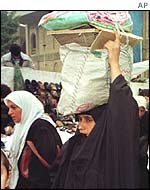
| | Thursday, 23 January, 2003, 13:30 GMT Agencies predict human disaster in Iraq  Clean water and food are already in short supply in Iraq An invasion of Iraq could have catastrophic humanitarian consequences, aid agencies have warned. The 1991 war, sanctions and the activities of the government itself have left the country acutely vulnerable to disease and food shortages, said Ed Cairns, senior policy adviser at the charity Oxfam.
"Very worrying health trends can be seen in Iraq, and it's certainly already in a dire situation, but a war will only make that worse," Mr Cairns told BBC News Online. His warning chimes with that of a representative for the UN Food and Agriculture Organisation, Elkheir Khaled, in another recent interview. Essentials of life Mr Cairns said two supply systems would be particularly vulnerable to military assault: water supplies and food rations. "Water and sanitation systems are dependent on the electrical supply - which could be attacked for military reasons but would have a very serious impact on people's health. "Second, because more than 50% of Iraqis are dependent on the rationing system under the Oil-for-Food programme, if either the transport infrastructure or the Iraqi bureaucracy were destroyed, both would have a devastating impact on the people."
According to Oxfam, falling oil prices over the past few years have meant that Iraq receives less revenue to finance - in this order - war reparations, UN administrative costs and the Oil-for-Food programme. On top of existing problems of malnutrition and sanitary disease, drought, and the lack of irrigation system parts that would allow Iraq to grow more of its own food, this leaves ordinary Iraqis extremely vulnerable to disruptions in food and water supplies. Reliance Mr Khaled gave a similarly bleak view of Iraqis' ability to cope with invasion. "There is reliance of the people here on the government and to get out of this dependency all of a sudden will be really disastrous, because people don't have the ability to cope," he told Reuters news agency. He said the Iraqi government's management of limited supplies under sanctions had been "amazing". "This may be the only place in the world where for the last 10 years everyone gets a ration, in a very efficient way. "And without this ration, starvation will come like this," he said, snapping his fingers. | |
See also:  07 Jan 03 | Middle East 27 Feb 02 | Middle East 22 Nov 02 | Middle East Internet links: The BBC is not responsible for the content of external internet sites Top Middle East stories now: Links to more Middle East stories are at the foot of the page. | ||||||||||||||||||||||||||||||||||||||||||||||||||||||||||||||||||||||||||||||||||||||||||||||||||||||||||||||||||||||||||||||||||||||||||||||||||||||||||||||||||||||||||||||||||||
 | |
|  E-mail this story to a friend E-mail this story to a friend |
| |
| Links to more Middle East stories |
| | | ||
 | ||||
 | | Back to top
| ||
| ---------------------------------------------------------------------------------- To BBC Sport>> | To BBC Weather>> | To BBC World Service>> ---------------------------------------------------------------------------------- © MMIII | News Sources | Privacy |





 For the last 10 years everyone gets a ration, in a very efficient way... Without this ration, starvation will come