|
 |
 | | | | | | ||||||||||||||||||||||||||||||||||||||||||||||||||||||||||||||||||||||||||||||||||||||||||||||||||||||||||||||||||||||||||||||||||||||||||||||||||||||||||||||||||||||||||||||||||||||||||||||||||||||||||||||||||||||||||||||||||||||
| | | You are in: Middle East | ||||||||||||||||||||||||||||||||||||||||||||||||||||||||||||||||||||||||||||||||||||||||||||||||||||||||||||||||||||||||||||||||||||||||||||||||||||||||||||||||||||||||||||||||||||||||||||||||||||||||||||||||||||||||||||||||||||||||
|
| | Tuesday, 21 January, 2003, 14:08 GMT Iraq: War in two stages? 
An analysis of the troop deployments announced by the United States and Britain indicates that a ground war could be launched from about the middle of March, according to military experts. The war could be in two stages - an initial assault from sea and land to take Basra and western and northern Iraq and then an operation to take Baghdad.
The plan would be for the fighting to be over by May when the weather hots up. The type of forces being deployed would be suitable for such operations. They are a mixture of marine units, both American and British, for the amphibious landing, infantry and armoured units for the land campaign and airborne troops for deployments into the north and west. Tighten the noose Major Charles Heyman, editor of Jane's World Armies, said that the concept would be a "tightening of the noose on Baghdad". The war would probably start with a brief but intense air campaign to hit Iraq's air defences and some "regime targets" - avoiding civilian areas as much as possible. An amphibious assault from the Gulf on Basra, combined with an armoured strike from Kuwait to cut off the city from the north would follow. "The capture of Basra would give the US and UK two airfields and a port," said Major Heyman. The Royal Navy will have six minesweepers available to clear the Shatt al-Arab waterway of Iraqi mines. Advance to Baghdad The airfields and port could then be used to bring in reinforcements for stage two, which would be an advance on Baghdad. Baghdad might provide the major problem for such a plan if Iraqi troops decided to fight in the streets.
Much would depend on the loyalty of units. A strong "psy-ops" [psychological warfare] effort will be made to persuade commanders and men to surrender. But a delay in capturing Baghdad could see fighting extended into May. Then the weather becomes an issue, though US troops can fight at night and aircraft would not be affected. At the same time as the first assault, the north of Iraq would be occupied by airborne troops (though Turkey has raised objections and they may be reduced in number as a result). They would act as a blocking force to prevent Saddam Hussein from retreating with his army into the Kurdish held areas.
The so-called "Scud box" in western Iraq would also be taken by airborne forces to prevent Iraq from firing any Scud missiles at Israel, although it is not clear whether Iraq has any left. At most it would have a dozen or so. These forces could be landed by helicopter from the Mediterranean, though Jordan would have to agree to overflights and possibly refuelling. No short-term operations It will take several weeks to get the main ground forces into position. "It is inconceivable that they can go into action from a standing start," said Major Heyman, "They need to get there, test their equipment with live firing and conduct exercises to be able to act as a cohesive force. It is highly unlikely that we will see military operations in the very short term." More US deployments are expected, probably from the 5th Corps in Germany. This is the main contingency force for deployment to Central Command, which would control the war. Conservative doctrine The number of troops being sent - about 125,000 so far by the Americans, more than 30,000 by the British, indicate that the conservative American military doctrine of overwhelming force has prevailed. Another, apparently now discounted option, would have been for a lighter invasion force to act "inside out" by taking Baghdad from the outset in a swift coup. The outlined scenario is in line with plans leaked to the New York Times and Washington Post in November. | |
See also:  20 Jan 03 | UK 20 Jan 03 | UK 20 Jan 03 | Europe 19 Jan 03 | Middle East 20 Jan 03 | Middle East 19 Jan 03 | Middle East 19 Jan 03 | Middle East 18 Jan 03 | UK 20 Jan 03 | Middle East 21 Jan 03 | UK Internet links: The BBC is not responsible for the content of external internet sites Top Middle East stories now: Links to more Middle East stories are at the foot of the page. | ||||||||||||||||||||||||||||||||||||||||||||||||||||||||||||||||||||||||||||||||||||||||||||||||||||||||||||||||||||||||||||||||||||||||||||||||||||||||||||||||||||||||||||||||||||||||||||||||||||||||||||||||||||||||||||||||||||||
 | |
|  E-mail this story to a friend E-mail this story to a friend |
| |
| Links to more Middle East stories |
| | | ||
 | ||||
 | | Back to top
| ||
| ---------------------------------------------------------------------------------- To BBC Sport>> | To BBC Weather>> | To BBC World Service>> ---------------------------------------------------------------------------------- © MMIII | News Sources | Privacy |






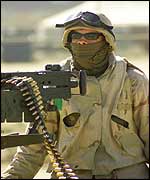
 The capture of Basra would give the US and UK two airfields and a port