|
 |
 | | | | | | |||||||||||||||||||||||||||||||||||||||||||||||||||||||||||||||||||||||||||||||||||||||||||||||||||||||||||||||||||||||||||||||||||||||||||||||||||||||||||||||||||||||||||||||||||||||||||||
| | | You are in: Middle East | |||||||||||||||||||||||||||||||||||||||||||||||||||||||||||||||||||||||||||||||||||||||||||||||||||||||||||||||||||||||||||||||||||||||||||||||||||||||||||||||||||||||||||||||||||||||||||||||
|
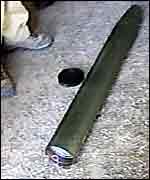
| | Monday, 20 January, 2003, 15:50 GMT Iraq: The disputed evidence  Twelve scud missiles are missing, presumed hidden
Before going into the detail, the general point has to be made that the case against Iraq does not depend on weapons of mass destruction, or a "smoking gun", being found. What is required under Security Council Resolution 1441 is simply a finding that Iraq has not "fully co-operated" with the weapons inspectors.
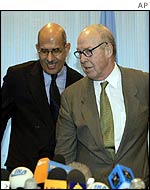
The case that Iraq is not fully "co-operating" was laid out by the chief UN weapons inspector, Hans Blix, and the head of the International Atomic Energy Agency (IAEA), Mohamed ElBaradei, to the Security Council on 9 January. News Online has seen copies of their written statements. They followed this up with a visit to Baghdad to raise the specific points of complaint and will report back to the Council on 27 January. As they left Baghdad they reported that Iraq had agreed to be more helpful. Mr Blix said that "a number of practical issues" had been resolved but "not all". Missing items The first area in dispute concerns Iraq's explanation about what happened to unaccounted-for material:
Suspicious finds Other issues in dispute relate to unlisted materials actually found, such as missile engines and empty warheads, as well as the question of access to Iraqi scientists:
Proving a negative There was better news for Iraq on the mystery of its attempted import of thousands of aluminium tubes. The suspicion was that it wanted these for centrifuges to enrich uranium for a nuclear bomb but Mr ElBaradei's report to the Council said that the IAEA analysis "indicated that the... tubes sought by Iraq... appear to be consistent with reverse engineering of rockets" as Iraq had asserted.
It can be seen that the United States and Britain could make much of the missing material. They could argue that Iraq has shown a pattern of limited co-operation which is designed to deceive. Iraq, on the other hand, complains that it is being asked to prove a negative and that in the circumstances, this is an impossible task. The assessment of the UN teams will be given to the Security Council on 27 January. | |
Internet links:  The BBC is not responsible for the content of external internet sites Top Middle East stories now: Links to more Middle East stories are at the foot of the page. | |||||||||||||||||||||||||||||||||||||||||||||||||||||||||||||||||||||||||||||||||||||||||||||||||||||||||||||||||||||||||||||||||||||||||||||||||||||||||||||||||||||||||||||||||||||||||||||
 | |
|  E-mail this story to a friend E-mail this story to a friend |
| |
| Links to more Middle East stories |
| | | ||
 | ||||
 | | Back to top
| ||
| ---------------------------------------------------------------------------------- To BBC Sport>> | To BBC Weather>> | To BBC World Service>> ---------------------------------------------------------------------------------- © MMIII | News Sources | Privacy |