|
 |
 | | | | | | |||||||||||||||||||||||||||||||||||||||||||||||||||||||||||||||||||||||||||||||||||||||||||||||||||||||||||||||||||||||||||||||||||||||||||||||||||||||||||||||||||||||||||||||||||||||||||||||||||||||||||||||||||||||||||||||||||
| | | You are in: Middle East | |||||||||||||||||||||||||||||||||||||||||||||||||||||||||||||||||||||||||||||||||||||||||||||||||||||||||||||||||||||||||||||||||||||||||||||||||||||||||||||||||||||||||||||||||||||||||||||||||||||||||||||||||||||||||||||||||||||
|
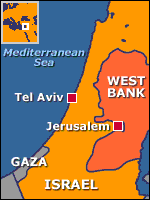
| | Monday, 6 January, 2003, 08:12 GMT Israel plans retaliation for blasts  It was the first suicide attack in Israel for six weeks Israel has told its armed forces to step up the fight against militants following a double suicide bombing which killed 23 people and the two bombers in Tel Aviv. As part of its reprisals for Sunday's attack, the Israeli cabinet also decided to prevent senior Palestinian officials from attending talks in London on reforming the Palestinian Authority, a close aide to Prime Minister Ariel Sharon said.
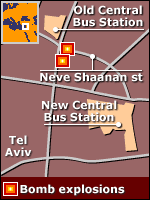
Soon after the Tel Aviv bombings, Israeli helicopters fired rockets at a large metalworking factory in Gaza City, which Israel said was being used to make weapons. Eight people were reportedly lightly injured. The Tel Aviv explosions - about two minutes apart - devastated the old bus station area and a busy shopping mall, injuring dozens of people, many of them foreign workers. It was the deadliest attack inside Israel since last March. Police said 68 injured people were still in hospital on Monday, two in critical condition and five serious. Israeli police said the two suicide bombers were carrying as much as 10 kilograms of explosives each, packed with bits of metal.
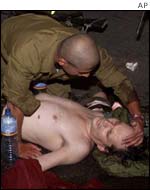
Bystanders tore off doors to use as makeshift stretchers as the area's narrow streets made it difficult for emergency services to evacuate casualties. The attack - the first suicide bombing in Israel since November - was claimed by the Al Aqsa Martyrs Brigades, an offshoot of Palestinian leader Yasser Arafat's Fatah movement. It named the two bombers as Buraq Khalifa and Tamir al-Nuri from the northern West Bank city of Nablus - a stronghold of the hardline group.
There were also less specific claims of responsibility from the militant groups Islamic Jihad and Hamas. Prime Minister Sharon blamed Yasser Arafat for the bombings, saying he had failed to establish a ceasefire. But he resisted a call from Foreign Minister Binyamin Netanyahu to expel Mr Arafat. Mr Sharon said that only when the terror had stopped would Israel be able to talk peace. Gaza raid The Israeli army said the factory targeted in the Gaza helicopter raid on Sunday was used by several "terrorist" groups for making mortars and other weapons.
Palestinian officials denied that weapons were made there, saying it was a car parts factory. Witnesses said Israeli tanks also moved into Rafah, in the south of the Gaza Strip, and destroyed the house of a wanted member of Islamic Jihad. Several of his relatives were detained. Condemnation In the Tel Aviv attack, said two massive explosions rocked the old bus station area at about 1830 (1630GMT), witnesses said.
Poor foreign workers - mainly east European, African, Thai and Chinese - predominate in the area. Yitzhak Teva, a local barber who was cutting hair at the time, said half of the wall fell on him and he was covered in broken glass. "I shut the shop and then there was the next explosion," he said. The Palestinians' chief negotiator, Saeb Erekat, said the Palestinian Authority had nothing to do with the Tel Aviv attack and condemned the targeting of civilians. President George Bush said he condemned the attack "in the strongest possible terms". "It is a despicable act of murder, and I express my condolences to the government and people of Israel and especially to the families of the victims," he said. "All who genuinely seek peace in the region must join in the effort to stop terror." Army operations The Israeli army has stepped up military operations in the West Bank and Gaza in the past six weeks, killing around 50 Palestinians and carrying out a relentless wave of house demolitions, incursions and arrests. Palestinians say this hindered attempts by Egypt and Europe to broker an agreement among the factions to stop attacks in Israel. Militants had vowed to take revenge for the army raids and said there would be no truce if incursions and assassinations continued. | |
See also:  06 Jan 03 | Middle East 05 Jan 03 | Middle East 21 Nov 02 | Middle East 18 Jul 02 | Middle East 18 Jul 02 | Middle East 21 Nov 02 | Middle East Internet links: The BBC is not responsible for the content of external internet sites Top Middle East stories now: Links to more Middle East stories are at the foot of the page. | |||||||||||||||||||||||||||||||||||||||||||||||||||||||||||||||||||||||||||||||||||||||||||||||||||||||||||||||||||||||||||||||||||||||||||||||||||||||||||||||||||||||||||||||||||||||||||||||||||||||||||||||||||||||||||||||||||
 | |
|  E-mail this story to a friend E-mail this story to a friend |
| |
| Links to more Middle East stories |
| | | ||
 | ||||
 | | Back to top
| ||
| ---------------------------------------------------------------------------------- To BBC Sport>> | To BBC Weather>> | To BBC World Service>> ---------------------------------------------------------------------------------- © MMIII | News Sources | Privacy |





 Half the wall fell on me and I was covered in broken glass