|
 |
 | | | | | | |||||||||||||||||||||||||||||||||||||||||||||||||||||||||||||||||||||||||||||||||||||||||||||||||||||||||||||||||||||||||||||||||||||||||||||||||||||||||||||||||||||||||||||||||||||||||||||||||||||||||||||||
| | | You are in: Middle East | |||||||||||||||||||||||||||||||||||||||||||||||||||||||||||||||||||||||||||||||||||||||||||||||||||||||||||||||||||||||||||||||||||||||||||||||||||||||||||||||||||||||||||||||||||||||||||||||||||||||||||||||||
|
| | Wednesday, 11 December, 2002, 18:34 GMT Legal maze over Scud seizure 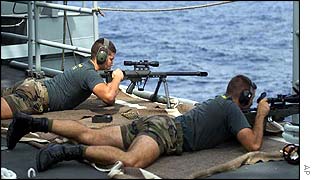 Spain acted on a tip-off from US intelligence The US row with Yemen over a shipment of Scud missiles from North Korea - first intercepted and then released - highlights the legal difficulty of blocking suspect arms deliveries to the Middle East. Washington let the shipment go after Yemen told the US ambassador to Sanaa that the missiles were destined for the Yemeni army "for defensive purposes" and would "not fall into the hands of a third party".
It would have been much harder if the ship had actually reached port. Ben Sheppard, a defence analyst at Jane's Information Group, says the US and its allies have gone to great lengths to curb missile proliferation. But such interceptions are "very much in a grey area" in international law. Suspicious behaviour Speaking after the Yemeni protest, White House spokesman Ari Fleischer said there was "no provision under international law prohibiting Yemen from accepting delivery of missiles from North Korea". He said the US did have authority to "stop and search," but in this case did not have authority to seize the Scuds. Yemen - now a valued ally in the US war on terror - gave Washington assurances that it would not transfer the missiles to anyone, he added. The US and Spain could argue that the interception was justified because the ship was acting suspiciously. It was not flying a national flag and had an unmanifested cargo - both violations of international law, US officials say. Eric Watkins, a Middle East shipping analyst, says the ship's actions come under what the US Navy describes as "suspicious behaviour". "The term is applied to ships behaving irregularly and justifies them being tracked and boarded." A Spanish warship fired warning shots before marines landed on board the ship and discovered the Scuds. Under international maritime law vessels can be boarded if they act inappropriately - if there are suspicions that they are involved in arms or drugs smuggling. And warning shots across the bows are accepted internationally as a last resort if a ship refuses to heed verbal warnings. Coalition patrols Warships from Spain, the UK, Germany and Australia - known as the Multinational Interception Force - are helping the US Navy to block arms shipments to Iraq in line with the UN embargo.
Numerous ships have been intercepted in the drive to stop weapons reaching Iraq and to prevent al-Qaeda members escaping from Afghanistan to the Middle East or Horn of Africa. But neither North Korea nor Yemen are bound by the Missile Control Technology Regime set up to control exports of long-range missiles. "There is no clear legal framework for the interception," Mr Sheppard told BBC News Online. The control regime prohibits the export of missiles with a range of more than 300 kilometres (186 miles). So Scuds with a range of 300 km or less would not be covered by it - and in any case the countries adhering to it are not required to impose sanctions on offending countries or firms. Surveillance The Scud shipment was reportedly tracked all the way from the North Korean port where the missiles were loaded on to the ship. "The US could say it knew the vessel was carrying Scuds - and that would make the US case far more credible," Mr Sheppard said. The US could also argue that the missiles' final destination was unknown when the ship was boarded. Curbing the proliferation of missiles around the world is now a central US policy goal in Washington's war on terror, and North Korean arms shipments come under close surveillance. Washington imposed sanctions on North Korea after it supplied Yemen with Scud missiles in 1999-2000, in a deal which Yemen vigorously defended at the time. 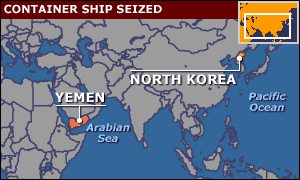 | |
See also:  11 Dec 02 | Asia-Pacific 09 Dec 02 | Africa 10 Nov 02 | Americas 08 Nov 02 | Africa 30 Jul 02 | Newsnight 07 Nov 02 | Europe 23 Dec 01 | South Asia 21 Dec 01 | UK Internet links: The BBC is not responsible for the content of external internet sites Top Middle East stories now: Links to more Middle East stories are at the foot of the page. | |||||||||||||||||||||||||||||||||||||||||||||||||||||||||||||||||||||||||||||||||||||||||||||||||||||||||||||||||||||||||||||||||||||||||||||||||||||||||||||||||||||||||||||||||||||||||||||||||||||||||||||||
| |
|  E-mail this story to a friend E-mail this story to a friend |
| |
| Links to more Middle East stories |
| | | ||
 | ||||
 | | Back to top
| ||
| ---------------------------------------------------------------------------------- To BBC Sport>> | To BBC Weather>> | To BBC World Service>> ---------------------------------------------------------------------------------- © MMIII | News Sources | Privacy |