|
 |
 | | | | | | |||||||||||||||||||||||||||||||||||||||||||||||||||||||||||||||||||||||||||||||||||||||||||||||||||||||||||||||||||||||||||||||||||||||||||||||||||||||||||||||
| | | You are in: Middle East | |||||||||||||||||||||||||||||||||||||||||||||||||||||||||||||||||||||||||||||||||||||||||||||||||||||||||||||||||||||||||||||||||||||||||||||||||||||||||||||||||
|
| | Monday, 2 December, 2002, 12:40 GMT Iran death sentence challenged 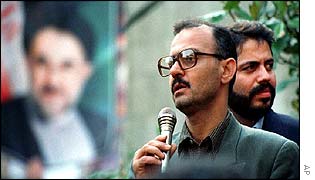 Professor Aghajari criticised Islamic clerics A lawyer for outspoken Iranian academic Hashem Aghajari has filed an appeal against his controversial death sentence for apostasy. "Hashem Aghajari's lawyer lodged an appeal Monday morning on the last day of a 20-day [appeal] period," court official Zekrollah Ahmadi told Tehran radio.
The chief prosecutor, Ayatollah Abdolnabi Namazi, said last Tuesday that if Mr Aghajari did not appeal within 20 days, the court verdict would be final. Hashem Aghajari was sentenced to death last month by a court in the western city of Hamedan on charges of insulting Islam. The sentence sparked a wave of reformist protests. Aghajari defiant Mr Aghajari, a history professor at a Tehran university, was charged after making a speech in which he said that each generation should re-interpret aspects of Islam rather than blindly following religious leaders. Two weeks of student protests followed - the largest in three years - which unnerved Iran's conservative hardliners and apparently led Mr Khamenei to order a review of the sentence.
These procedures require an appeal in order for the courts to act - but Mr Aghajari steadfastly refused to appeal, thereby preventing a review from taking place. It is not clear whether Mr Aghajari has now changed his mind or whether his lawyer Saleh Nikbakht went ahead anyway. Mr Nikbakht had earlier said he would appeal, even against his client's wishes, in order to calm the crisis. Power struggle Mr Aghajari's case highlights the power struggle between reformists, supporting President Mohammad Khatami's programme of social and political freedoms, and conservatives, who control unelected institutions such as the police and judiciary. The two sides are currently at loggerheads over two bills backed by President Khatami aiming to curb the power of the judiciary and the conservative-dominated Guardian Council. But, as with all legislation, the Guardian Council itself will have to approve the bills and analysts say it is unlikely to agree to shedding some of its own powers. | | See also:  26 Nov 02 | Middle East 25 Nov 02 | Middle East 18 Nov 02 | Middle East 13 Nov 02 | Middle East 02 Dec 02 | Middle East Internet links: The BBC is not responsible for the content of external internet sites Top Middle East stories now: Links to more Middle East stories are at the foot of the page. | |||||||||||||||||||||||||||||||||||||||||||||||||||||||||||||||||||||||||||||||||||||||||||||||||||||||||||||||||||||||||||||||||||||||||||||||||||||||||||||||
| |
|  E-mail this story to a friend E-mail this story to a friend |
| |
| Links to more Middle East stories |
| | | ||
 | ||||
 | | Back to top
| ||
| ---------------------------------------------------------------------------------- To BBC Sport>> | To BBC Weather>> | To BBC World Service>> ---------------------------------------------------------------------------------- © MMIII | News Sources | Privacy |