|
 |
 | | | | | | ||||||||||||||||||||||||||||||||||||||||||||||||||||||||||||||||||||||||||||||||||||||||||||||||||||||||||||||||||||||||||||||||||||||||||||||||||||||||||||||||||||||||||||||||||||||||||||||
| | | You are in: Middle East | ||||||||||||||||||||||||||||||||||||||||||||||||||||||||||||||||||||||||||||||||||||||||||||||||||||||||||||||||||||||||||||||||||||||||||||||||||||||||||||||||||||||||||||||||||||||||||||||||
|
| | Wednesday, 27 November, 2002, 14:45 GMT Iraqi opposition plots post-Saddam future 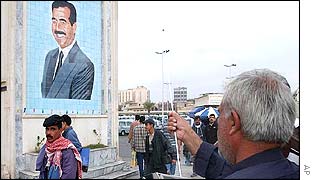 The US still holds out hope for a coup in Baghdad
Rather late in the day, the Bush administration is turning its attention to the vexed question of a post-Saddam Hussein Iraq. In other words, what will happen if the Iraqi leader Saddam Hussein is overthrown as a result of a US-led attack? How far will Washington and its allies be able to shape events and bring into being a new and democratic Iraq?
The conference has been repeatedly postponed because of disagreement over who should take part. American officials have been encouraging Iraqi opponents of Saddam to take part in a series of working groups to discuss everything from the justice system to water resources and job creation. One group, set up in September, has just produced a draft document entitled "The Transition to Democracy in Iraq". This will be one of several papers to be discussed at next month's conference in London. Originally to have taken place in Brussels, the conference has been repeatedly postponed because of disagreement over who should take part. Only as a result of head-banging by US officials has it now been rescheduled. Heated debate The democracy document is not being made public. But Iraqis in London and Washington regard it as an important achievement, albeit the result of sometimes heated debate. The group which drafted it was made up of 32 Iraqis, half of them independent intellectuals, the other half representing the main opposition groups. They reached a consensus on some issues but not others. There was agreement on the need to replace the current authoritarian government in Baghdad with one which respects human rights and the rule of law. The group favours a united but federal Iraq but says more thought should be given to how federalism would work. There was heated debate over whether to issue an amnesty for members of the present regime. The group wants those responsible for the worst human-rights abuses to be made accountable, but also feels the need for a healing of wounds - for example through a "truth and reconciliation commission" like that in post-apartheid South Africa. Insiders and outsiders But the trickiest issue of all is the shape of a new, post-Saddam government. The group wants the Iraqis outside Saddam's control - the four million Kurds and three million Iraqis in exile - to form the nucleus of a "transitional authority".
However, the group regards a 50-50 split as only one of several possible formulas. But the issue of insiders and outsiders, and the inevitable mistrust between them, is shaping up to be one of the most difficult problems confronting the Bush administration and its Iraqi allies. Opposition groups abroad - in alliance with the Kurds of northern Iraq - are wary of anyone associated with the Saddam regime. Many Iraqis in Baghdad do not trust the Kurds and tend to see opposition groups in Washington, London and elsewhere as being in league with foreign powers. Washington's 'tribes' The key decision-makers are in Washington. The Pentagon and the Congress have traditionally supported the main opposition umbrella group - the Iraqi National Congress (INC) - and favour an INC-led government-in-exile. The State Department and the CIA do not regard the INC as a credible force and oppose the idea of a government-in-exile. But despite their differences, these factions - the "Washington tribes" as one Iraqi intellectual calls them - realise that a successful military coup in Baghdad might transform the whole situation. If Saddam were overthrown from inside, the aim of "regime change" would be achieved and a full-scale US-led invasion might become unnecessary. So US officials are anxious not to alienate the insiders - especially the military - by endorsing the idea that opposition groups abroad, in alliance with the Kurds, would dominate a post-Saddam government. | |
See also:  26 Nov 02 | Middle East 11 Oct 02 | Middle East 26 Sep 02 | Middle East 30 Oct 02 | Middle East 22 Oct 02 | Middle East Internet links: The BBC is not responsible for the content of external internet sites Top Middle East stories now: Links to more Middle East stories are at the foot of the page. | ||||||||||||||||||||||||||||||||||||||||||||||||||||||||||||||||||||||||||||||||||||||||||||||||||||||||||||||||||||||||||||||||||||||||||||||||||||||||||||||||||||||||||||||||||||||||||||||
| |
|  E-mail this story to a friend E-mail this story to a friend |
| |
| Links to more Middle East stories |
| | | ||
 | ||||
 | | Back to top
| ||
| ---------------------------------------------------------------------------------- To BBC Sport>> | To BBC Weather>> | To BBC World Service>> ---------------------------------------------------------------------------------- © MMIII | News Sources | Privacy |