|
 |
 | | | | | | |||||||||||||||||||||||||||||||||||||||||||||||||||||||||||||||||||||||||||||||||||||||||||||||||||||||||||||||||||||||||||||||||||||||||||||||||||||||||||||||||||||||||||||||||||||||||
| | | You are in: Middle East | |||||||||||||||||||||||||||||||||||||||||||||||||||||||||||||||||||||||||||||||||||||||||||||||||||||||||||||||||||||||||||||||||||||||||||||||||||||||||||||||||||||||||||||||||||||||||||
|
| | Tuesday, 5 November, 2002, 12:51 GMT The poll Sharon didn't want 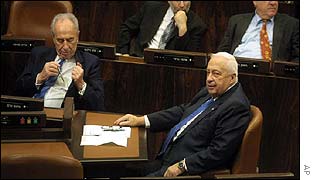 Labor and Likud were always unhappy bedfellows
Early elections are an outcome Mr Sharon seemed eager to avoid, but - with only 55 members of the 120-member Knesset on his side - he had little choice. Struggling to keep a minority government afloat until October 2003 - through some of the toughest economic, political and security challenges Israel will ever face - would have done his standing no good with the electorate. His strongest challenge is likely to come from his own Likud party, with the charismatic and popular Binyamin Netanyahu, the new foreign minister, doing all he can to seize power from the veteran Mr Sharon. No rightward lurch, yet Mr Sharon's election call means that another much-feared outcome has been avoided - the appointment to the cabinet of some of Israel's most extreme religious nationalists to replace outgoing moderates from the Labor party.
But it seems he was not prepared to blow away the last vestiges of hope for a peace deal with the Palestinians. The extremists' demands included ruling out completely a future Palestinian state, expelling the Palestinian leader, Yasser Arafat, and scoring a "military victory" in the West Bank and Gaza. Such measures might have chimed with Mr Sharon's instincts as the soldier-politician of yore, but not with the image of the statesman he has attempted to promote since his elevation to the prime ministerial office 20 months ago. Unneeded election So - as Mr Sharon has stressed - Israel is to be engulfed in another expensive, time-consuming and potentially divisive election at the time when unity is most needed. This year's budget could face further obstacles (it has already caused the withdrawal of Labor cabinet members) as Israel goes through the worst economic crisis of its 54-year history.
Labor also has a leadership election, due on 19 November, although at least it has something to gain from dusting off its pro-peace credentials and putting forward compromises, on Jewish settlements especially, that could mark a path out of the current bloody cycle of violence. All this will come to a crescendo in early February - the very time US military planners may have pencilled in for Operation Regime Change, a few hundred kilometres to the east in Saddam Hussein's Iraq. And what will elections achieve? Well, the last four Israeli governments have survived an average of under two years and, despite their great promises to bring enduring peace and security, they have all left power with the situation incomparably worse than when they entered it. | |
See also:  28 Oct 02 | Middle East 22 May 02 | Middle East 30 Oct 02 | Middle East 04 Dec 01 | profiles Internet links: The BBC is not responsible for the content of external internet sites Top Middle East stories now: Links to more Middle East stories are at the foot of the page. | |||||||||||||||||||||||||||||||||||||||||||||||||||||||||||||||||||||||||||||||||||||||||||||||||||||||||||||||||||||||||||||||||||||||||||||||||||||||||||||||||||||||||||||||||||||||||
| |
|  E-mail this story to a friend E-mail this story to a friend |
| |
| Links to more Middle East stories |
| | | ||
 | ||||
 | | Back to top
| ||
| ---------------------------------------------------------------------------------- To BBC Sport>> | To BBC Weather>> | To BBC World Service>> ---------------------------------------------------------------------------------- © MMIII | News Sources | Privacy |