
|
 |
 | | | | | | ||||||||||||||||||||||||||||||||||||||||||||||||||||||||||||||||||||||||||||||||||||||||||||||||||||||||||||||||||||||||||||||||||||||||||||||||||||||||||||||||||||||||
| | | You are in: Middle East | ||||||||||||||||||||||||||||||||||||||||||||||||||||||||||||||||||||||||||||||||||||||||||||||||||||||||||||||||||||||||||||||||||||||||||||||||||||||||||||||||||||||||||
|
| | Monday, 4 November, 2002, 16:21 GMT Iraqi orchestra soldiers on 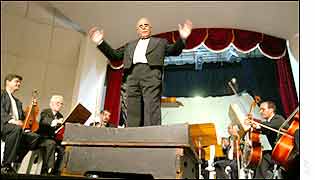 Playing on despite sanctions and shortages
"Sanctions have affected us all in many ways," says 39-year-old cellist, Omar al-Sheikh, who works as an engineer by day. "There are problems with the availability of instruments and of spare parts. One of my strings broke and I couldn't find a replacement." But the conductor, Abdel Razzak Al-Azzawi, makes light of these "minor" inconveniences, insisting that "life has to continue." Escape from tragedy Al-Azzawi, who studied at the Royal Military School of Music in Britain, has found solace in music from both personal tragedy and Iraq's political crises. He performed a major concert a week after he lost his two young children in an Iranian missile attack in 1995. "The biggest problem for the orchestra is that we lost some good performers who left for Syria or Jordan or other places to find a better life and better opportunities," he says. "That can affect the balance of the whole orchestra." The 45-member Iraqi National Orchestra now has only one oboist left, but it still rehearses three times a week and is currently performing Mozart, Haydn and one of Al-Azzawi's own compositions in central Baghdad.
Dressed in immaculate black tie, they play to an auditorium only half full, although the tickets cost the equivalent of just 50 cents. Playing on Al-Azzawi says the 50-year-old orchestra has only stopped playing once - for two months during the Gulf war of 1991. But it has not performed abroad since a concert in Jordan in the early 1990s. "Invite me to England," says Al-Azzawi. "We're ready to go whenever we're asked." Annie Mankonian, a 20-year old violinist who plays with an instrument her father gave her when she was six, can just remember the Iraqi musical scene before sanctions were imposed. "Teachers came from England, France, and Russia," she says. "Conductors came from abroad to help us. Now that's rare." But Al-Azzawi dismisses the difficulties, and concerns about the possibility of a new war. "It's hard for everyone," he says. "But we must continue working, rehearsing and giving concerts. We mustn't stop." | | See also:  22 Jun 01 | Middle East Internet links: The BBC is not responsible for the content of external internet sites Top Middle East stories now: Links to more Middle East stories are at the foot of the page. | ||||||||||||||||||||||||||||||||||||||||||||||||||||||||||||||||||||||||||||||||||||||||||||||||||||||||||||||||||||||||||||||||||||||||||||||||||||||||||||||||||||||||
| |
|  E-mail this story to a friend E-mail this story to a friend |
| |
| Links to more Middle East stories |
| | | ||
 | ||||
 | | Back to top
| ||
| ---------------------------------------------------------------------------------- To BBC Sport>> | To BBC Weather>> | To BBC World Service>> ---------------------------------------------------------------------------------- © MMIII | News Sources | Privacy |






