|
 |
 | | | | | | ||||||||||||||||||||||||||||||||||||||||||||||||||||||||||||||||||||||||||||||||||||||||||||||||||||||||||||||||||||||||||||||||||||||||||||||||||||||||||||||||||||||||
| | | You are in: Middle East | ||||||||||||||||||||||||||||||||||||||||||||||||||||||||||||||||||||||||||||||||||||||||||||||||||||||||||||||||||||||||||||||||||||||||||||||||||||||||||||||||||||||||||
|
| | Tuesday, 8 October, 2002, 17:00 GMT 18:00 UK Riyadh 'to fingerprint US visitors' 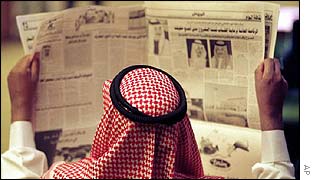 Saudis were angered by new US security regime US diplomats say Saudi Arabia is set to impose tit-for-tat immigration procedures on American citizens following the tightening of security checks on some visitors to the United States. The US embassy in Riyadh has advised Americans that they may be subjected to fingerprinting as part of the visa and entry process, and may be given visas that are shorter in duration and more expensive. An embassy statement to US expatriates quoted by news agencies said the new measures were "in response to the introduction at US ports of entry... of the National Security Entry Exit Registration System".
Visitors who have been to these countries and do not provide a satisfactory explanation to US immigration officials are also required to register. There has been no announcement about the new measures from the Saudi Government and the US embassy has declined to comment on its statement. Secret criteria Under Washington's new regime, visitors who conform to an undisclosed set of criteria can be deemed to pose a heightened threat to US security. Unveiling the measures in July, Attorney General John Ashcroft said the criteria would apply to nearly all visitors from countries listed by the US State Department as "state sponsors of terrorism" - including Libya, Iran, Iraq, Sudan and Syria. The security threat list was later expanded to include men from Saudi Arabia, from where 15 of the 19 alleged perpetrators of the 11 September attacks originated. Both Riyadh and Washington maintain that bilateral relations are as solid as they were before 11 September 2001, but correspondents say the new US visa measures - plus Washington's orientation in the Arab-Israel conflict and its threat to attack Iraq - have undermined non-governmental ties. About 30,000 Americans are thought to reside in Saudi Arabia, which is Washington's main ally in the Gulf. Hundreds of Saudi and other Arab and Muslim students are reported to have been unable to start the current academic year in the US after being denied entry into the country. Malaysia and Pakistan have reacted angrily to new American regulations, saying they are "unfair" and likely to fuel prejudice against Muslims. | |
See also:  01 Oct 02 | Americas 02 Dec 02 | Americas 06 Jun 02 | Middle East 26 Jun 02 | Americas 09 Apr 02 | Americas 11 Jun 02 | Americas 02 Oct 02 | Americas Internet links: The BBC is not responsible for the content of external internet sites Top Middle East stories now: Links to more Middle East stories are at the foot of the page. | ||||||||||||||||||||||||||||||||||||||||||||||||||||||||||||||||||||||||||||||||||||||||||||||||||||||||||||||||||||||||||||||||||||||||||||||||||||||||||||||||||||||||
| |
|  E-mail this story to a friend E-mail this story to a friend |
| |
| Links to more Middle East stories |
| | | ||
 | ||||
 | | Back to top
| ||
| ---------------------------------------------------------------------------------- To BBC Sport>> | To BBC Weather>> | To BBC World Service>> ---------------------------------------------------------------------------------- © MMIII | News Sources | Privacy |