|
 |
 | | | | | | |||||||||||||||||||||||||||||||||||||||||||||||||||||||||||||||||||||||||||||||||||||||||||||||||||||||||||||||||||||||||||||||||||||||||||||||||||||||||||||||||||||||||||||||||||
| | | You are in: Middle East | |||||||||||||||||||||||||||||||||||||||||||||||||||||||||||||||||||||||||||||||||||||||||||||||||||||||||||||||||||||||||||||||||||||||||||||||||||||||||||||||||||||||||||||||||||||
|
| | Monday, 30 September, 2002, 18:36 GMT 19:36 UK Arab leaders debate Iraq crisis 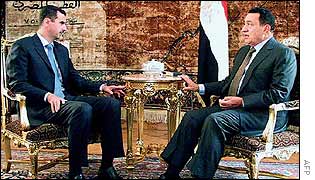 Syria and Egypt say their region faces disaster The leaders of four Arab states have been holding talks in two separate meetings as tensions grow over Iraq. The Syrian President, Bashar al-Assad, and his Egyptian counterpart, Hosni Mubarak, met in Egypt and urged the United Nations Security Council to exhaust all means to avert an American attack on Iraq. In Kuwait, King Abdullah of Jordan met the Emir, Sheikh Jaber al-Ahmad al-Sabah, in his latest effort to repair ties with the emirate. Correspondents say that the two countries might support a US-led attack on Iraq if the action was sanctioned by the United Nations. Disaster A joint statement by Mr Mubarak and Mr Assad said they agreed "on the need to strengthen the international position rejecting a military strike against Iraq... so that the people of the region can avoid a disaster". They called for a quick resumption of UN weapons inspections to verify that Iraq no longer possessed weapons of mass destruction. The appeal came as Iraqi and UN officials met in Vienna to hammer out details of the return of weapons inspectors.
Mr Mubarak and Mr Assad called on the UN Security Council "to force Israel to implement (international) resolutions and withdraw from the land it has occupied" in the West Bank. Arab states say that while pressure is being put on Iraq to abide by Security Council resolutions, Israel has been allowed to flout them. In May, the leaders of Egypt, Syria and Saudi Arabia held a summit in the Egyptian Red Sea resort of Sharm el-Sheikh and expressed "sincere" Arab determination to forge peace with Israel. Ties improving In Kuwait, talks between King Abdullah and Sheikh Jaber al-Ahmad al-Sabah were described by the official Kuwait News Agency as "brotherly". Relations between the two countries nosedived during the Gulf War when the late King Hussein of Jordan appeared to side with Iraq during its occupation. After the war, about 400,000 Palestinians and Jordanians left or were expelled from the Gulf state. Kuwait also cut political support and financial aid to Jordan. Since coming to power in 1999, King Abdullah has improved ties with Kuwait which he has visited four times. His wife, Queen Rania, grew up in Kuwait with her Palestinian family. In an interview just before his visit, King Abdullah said the situation with Iraq was "very serious" and called for renewed Arab efforts to avoid a war. The governments of both countries are on good terms with the US but want Washington to proceed with caution and have urged Iraq to defuse the crisis. | |
See also:  30 Sep 02 | Americas 26 Sep 02 | In Depth 27 Sep 02 | Media reports 15 Jul 02 | Middle East 05 Sep 02 | Middle East Top Middle East stories now: Links to more Middle East stories are at the foot of the page. | |||||||||||||||||||||||||||||||||||||||||||||||||||||||||||||||||||||||||||||||||||||||||||||||||||||||||||||||||||||||||||||||||||||||||||||||||||||||||||||||||||||||||||||||||||
| |
|  E-mail this story to a friend E-mail this story to a friend |
| |
| Links to more Middle East stories |
| | | ||
 | ||||
 | | Back to top
| ||
| ---------------------------------------------------------------------------------- To BBC Sport>> | To BBC Weather>> | To BBC World Service>> ---------------------------------------------------------------------------------- © MMIII | News Sources | Privacy |