|
 |
 | | | | | | |||||||||||||||||||||||||||||||||||||||||||||||||||||||||||||||||||||||||||||||||||||||||||||||||||||||||||||||||||||||||||||||||||||||||||||||||||||||||||||||||||||||||||||||||||||||||||||
| | | You are in: Middle East | |||||||||||||||||||||||||||||||||||||||||||||||||||||||||||||||||||||||||||||||||||||||||||||||||||||||||||||||||||||||||||||||||||||||||||||||||||||||||||||||||||||||||||||||||||||||||||||||
|
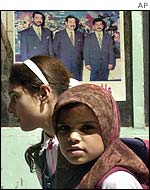
| | Monday, 23 September, 2002, 18:39 GMT 19:39 UK Analysis: Planning for a free Iraq  The US says it has no quarrel with ordinary Iraqis
US President George W Bush's National Security Adviser, Condoleezza Rice, has spoken of the US administration's long-term commitment to building a new Iraq. Ms Rice said the US and its allies would be "completely devoted" to the reconstruction of Iraq as a unified and democratic country with a broad-based government, once Iraqi leader Saddam Hussein had been overthrown. Ms Rice, in a wide-ranging interview in the UK's Financial Times newspaper on Monday, said the administration supported the "march of freedom in the Muslim world". Her remarks coincided with comments by the US Defence Secretary, Donald Rumsfeld.
He described the Iraqis as "hostages to a small group of dictatorial, repressive government officials". They had been punished enough, he said. All the signs are that the Americans are drawing up a military and political strategy designed to isolate Saddam Hussein and his ruling elite, while encouraging the rest of the population to desert him. The Americans are saying, in effect: "Our quarrel is with a small number of people close to Saddam. Our aim is not to occupy and rule Iraq but to get rid of the present regime." US message The Americans want to give the Iraqis - including members of the security forces and the ruling Ba'ath Party - an incentive to rise up and take power. They are signalling that if Iraqis stay loyal to Saddam Hussein they can expect to suffer, but if they turn against him they will reap the benefits in a new and democratic Iraq. However, many analysts believe the US administration may be underestimating the difficulties involved in bringing this "new Iraq" into being.
Historically, Iraq was created by Britain at the end of World War I, from three disparate bits of the Ottoman empire - the Kurdish north, the Sunni centre and the Shia south. If Saddam is toppled, there is a risk of anarchy or even civil war. As for democracy, Iraq is not fertile soil. Saddam Hussein has made the country a "politics-free" zone. He has destroyed all forms of overt opposition. There are no genuine political parties or trade unions - in fact, no civil society worthy of the name. Memories There can be no doubt that Iraqis have suffered a great deal during the two decades and more of Saddam Hussein's rule. But some Iraqis mistrust US intentions. Many still remember when in 1991 the first President Bush encouraged the Kurds of the north and the Shias of the south to rebel against Saddam. They did so, and the rebellions were brutally crushed by forces loyal to Saddam Hussein. US officials insist that this time will be different. But Iraqis may need some convincing that freedom is theirs for the taking. | |
See also:  22 Sep 02 | Politics 20 Sep 02 | Americas 20 Sep 02 | Americas 20 Sep 02 | Hardtalk 20 Sep 02 | Americas Internet links: The BBC is not responsible for the content of external internet sites Top Middle East stories now: Links to more Middle East stories are at the foot of the page. | |||||||||||||||||||||||||||||||||||||||||||||||||||||||||||||||||||||||||||||||||||||||||||||||||||||||||||||||||||||||||||||||||||||||||||||||||||||||||||||||||||||||||||||||||||||||||||||
| |
|  E-mail this story to a friend E-mail this story to a friend |
| |
| Links to more Middle East stories |
| | | ||
 | ||||
 | | Back to top
| ||
| ---------------------------------------------------------------------------------- To BBC Sport>> | To BBC Weather>> | To BBC World Service>> ---------------------------------------------------------------------------------- © MMIII | News Sources | Privacy |