|
 |
 | | | | | | ||||||||||||||||||||||||||||||||||||||||||||||||||||||||||||||||||||||||||||||||||||||||||||||||||||||||||||||||||||||||||||||||||||||||||||||||||||||||||||||||||||||||||||||||||||||||||||||||||||||||||||||||||||||||||||||||||||||||
| | | You are in: Middle East | ||||||||||||||||||||||||||||||||||||||||||||||||||||||||||||||||||||||||||||||||||||||||||||||||||||||||||||||||||||||||||||||||||||||||||||||||||||||||||||||||||||||||||||||||||||||||||||||||||||||||||||||||||||||||||||||||||||||||||
|
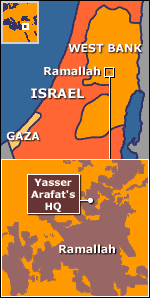
| | Sunday, 22 September, 2002, 17:16 GMT 18:16 UK Protests grow over Arafat siege 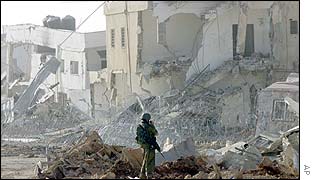 Israel's aim is to make life unbearable for Yasser Arafat Israel's siege and destruction of Yasser Arafat's headquarters in Ramallah is causing mounting protests, from both the international community and the Palestinian population. The White House said Israel's action was "not helpful" in ending Palestinian suicide bombings.
The army has kept up pressure on Mr Arafat by intermittently cutting water and power supplies, after tearing down the last remaining building next to his office overnight. Mr Arafat is refusing to give in to the Israeli Government's demands that he surrender 50 suspected militants Israel says are hiding in his offices.
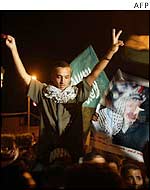
Israel says it does not intend to harm Mr Arafat, and the army later made it clear there were no plans to blow up the building. Just a few kilometres from Mr Arafat's compound, troops fired tear gas and live rounds to disperse a chanting crowd breaking a curfew. One protester and a journalist were killed, medical sources said. Two other people were killed in Tulkarm and the Balata refugee camp next to Nablus. Later on Sunday, a teenager was shot dead in Nablus. There have also been large demonstrations in Gaza, which is still under Palestinian control, and in Jericho, where several hundred people marched on a prison holding six men jailed as part of a deal in May to lift the last siege of Mr Arafat's compound.
Reports in Israel say the assault on Ramallah is meant to force Mr Arafat to choose exile rather than suffer the relentless pressure put on him by the army. Deputy Defence Minister Weizman Shiri said that Mr Arafat could leave the country, but would not be allowed to return. "If he decides he wants to get out we'll give him a lift," Mr Shiri told army radio on Sunday. Inside the compound, the Palestinian leader is reported to have told his entourage that he wanted God to "grant him the honour of martyrdom" and no one would be handed over to Israel. Israel initially said there were 19 wanted men in the compound, including members of the intelligence service and Mr Arafat's personal bodyguard, but a senior army officer said the figure increased because the army had not had a complete picture of who was inside. International reaction France has condemned the siege on Mr Arafat's compound as "unacceptable" and called for it to be halted immediately. Denmark, the current president of the European Union, said Israel's actions would neither curb terror nor improve security for its civilians. The Egyptian President, Hosni Mubarak, has called on the United States to intervene immediately; and Jordan said Israel's actions threatened the stability of the region. Prime Minister Bulent Ecevit of Turkey - Israel's principal ally in the region - also said he was "extremely upset" by an attack on "the legitimate representative" of the Palestinian people. | |
See also:  22 Sep 02 | Middle East 22 Sep 02 | Middle East 21 Sep 02 | Middle East 20 Sep 02 | Media reports 19 Sep 02 | Middle East 19 Sep 02 | Middle East 19 Sep 02 | Middle East 20 Sep 02 | Scotland 22 Sep 02 | Middle East Internet links: The BBC is not responsible for the content of external internet sites Top Middle East stories now: Links to more Middle East stories are at the foot of the page. | ||||||||||||||||||||||||||||||||||||||||||||||||||||||||||||||||||||||||||||||||||||||||||||||||||||||||||||||||||||||||||||||||||||||||||||||||||||||||||||||||||||||||||||||||||||||||||||||||||||||||||||||||||||||||||||||||||||||||
| |
|  E-mail this story to a friend E-mail this story to a friend |
| |
| Links to more Middle East stories |
| | | ||
 | ||||
 | | Back to top
| ||
| ---------------------------------------------------------------------------------- To BBC Sport>> | To BBC Weather>> | To BBC World Service>> ---------------------------------------------------------------------------------- © MMIII | News Sources | Privacy |