|
 |
 | | | | | | ||||||||||||||||||||||||||||||||||||||||||||||||||||||||||||||||||||||||||||||||||||||||||||||||||||||||||||||||||||||||||||||||||||||||||||||||||||||||||||||||||||||||||||||||||||||||||||||||||||||||||||||||||||||||||||||||||||||||
| | | You are in: Middle East | ||||||||||||||||||||||||||||||||||||||||||||||||||||||||||||||||||||||||||||||||||||||||||||||||||||||||||||||||||||||||||||||||||||||||||||||||||||||||||||||||||||||||||||||||||||||||||||||||||||||||||||||||||||||||||||||||||||||||||
|
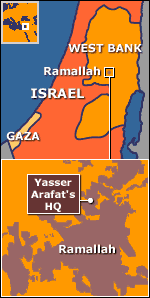
| | Saturday, 21 September, 2002, 04:26 GMT 05:26 UK Arafat pinned down in HQ 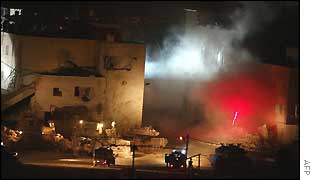 Israel wants suspected militants to surrender Israeli forces besieging Yasser Arafat have destroyed nearly all the buildings in his West Bank compound and at least one tank shell has hit the Palestinian leader's offices. The Israeli army says it is not deliberately targeting the office building and that any firing inside the compound is a warning to suspected militants to give themselves up.
More than 20 people have surrendered but they are not thought to include the senior security officials wanted by Israel. The offensive at the Ramallah headquarters follows two suicide bombings by Palestinians this week and Israel says it will continue until the wanted men surrender. However, the US has urged Israel to use restraint. White House spokesman Ari Fleischer said: "Israel has the right to defend itself and to deal with security, but Israel also has to bear in mind the consequences of action and Israel's stake in development of reforms in the Palestinian institutions." Mr Arafat is reportedly unhurt by the firing, but was showered with dust when the shell hit, a Palestinian photographer inside the office told Reuters news agency. Demolition Earlier, the Israeli army destroyed an overhead walkway connecting Mr Arafat's office to an adjoining building, and Palestinian officials inside the compound say they fear the structure could collapse. Tank shelling and machine-gun fire can be heard around Mr Arafat's compound as Israeli helicopters hover overhead. The men Israel wants to surrender include the head of West Bank intelligence, Tawfiq Tirawi, accused by Israel of involvement in terrorist activities, and Mahmud Damra, the leader of Mr Arafat's Force-17 bodyguard. Television pictures from the scene have shown Israeli troops blindfolding men and taking them away.
But Palestinian officials said these were not those wanted by Israel, only civilian employees and perhaps some of Mr Arafat's guards. Mr Arafat's battered headquarters was described by a BBC correspondent at the scene, Barbara Plett, as resembling a lonely island in a sea of rubble. The Israeli army spent much of the day blowing up or bulldozing as many as nine buildings in the compound, and digging a trench around Mr Arafat's offices. Israeli sources are talking about a long stay for the military, and the curfew in Ramallah and other West Bank towns has been tightened. Meanwhile, the sixth victim of Israel's latest suicide bombing - an 18-year-old British student - has died from wounds suffered in Thursday's attack on a Tel Aviv bus. The Ramallah siege coincided with two Israeli army incursions into the Gaza Strip, with one group of soldiers advancing to the edge of Gaza City and another penetrating an area near the towns of Beit Lahiya and Beit Hanun. At least three Palestinians - a man, a woman and a teenage boy - were killed by the Israeli fire. Chief Palestinian negotiator Saeb Erekat appealed to the international community to stop the Israeli "aggression" and accused Israeli Prime Minister Ariel Sharon of trying to destroy the peace process. At the United Nations in New York, the Palestinians called for immediate measures to stop the attack on the compound. Mr Arafat is said to be unhurt, but a Palestinian cabinet minister described him as "angry".
When told that Israeli bulldozers were tearing down a fence, Mr Arafat "became tense, pulled out his little machine-gun and ran to fight the Israelis outside," the Labour Minister, Ghassan al-Khatib, told Reuters news agency. "His aides and bodyguards ran after him and forced him back," he added. Israeli Defence Minister Binyamin Bin-Eliezer told army radio that Israel had "no intention" of firing at Mr Arafat or expelling him from the West Bank. For much of the past year, the Palestinian leader has been confined in Ramallah, with most of his compound already destroyed. Israel's cabinet met for a full emergency session for the first time in six months on Thursday night and decided to "isolate" Mr Arafat. But the question of expelling the Palestinian leader was apparently dropped on the grounds that it would do Israel more harm than good. | |
See also:  20 Sep 02 | Middle East 20 Sep 02 | Media reports 19 Sep 02 | Middle East 19 Sep 02 | Middle East 19 Sep 02 | Middle East 20 Sep 02 | Scotland Internet links: The BBC is not responsible for the content of external internet sites Top Middle East stories now: Links to more Middle East stories are at the foot of the page. | ||||||||||||||||||||||||||||||||||||||||||||||||||||||||||||||||||||||||||||||||||||||||||||||||||||||||||||||||||||||||||||||||||||||||||||||||||||||||||||||||||||||||||||||||||||||||||||||||||||||||||||||||||||||||||||||||||||||||
| |
|  E-mail this story to a friend E-mail this story to a friend |
| |
| Links to more Middle East stories |
| | | ||
 | ||||
 | | Back to top
| ||
| ---------------------------------------------------------------------------------- To BBC Sport>> | To BBC Weather>> | To BBC World Service>> ---------------------------------------------------------------------------------- © MMIII | News Sources | Privacy |