|
 |
 | | | | | | |||||||||||||||||||||||||||||||||||||||||||||||||||||||||||||||||||||||||||||||||||||||||||||||||||||||||||||||||||||||||||||||||||||||||||||||||||||||||||||||||||||||||||||||||||||||||||||
| | | You are in: Middle East | |||||||||||||||||||||||||||||||||||||||||||||||||||||||||||||||||||||||||||||||||||||||||||||||||||||||||||||||||||||||||||||||||||||||||||||||||||||||||||||||||||||||||||||||||||||||||||||||
|
| | Monday, 16 September, 2002, 13:36 GMT 14:36 UK Analysis: Saudis shift Iraq policy 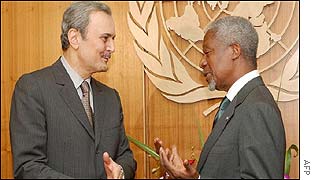 The Saudis still want UN approval for any action against Iraq
The Saudi Foreign Minister, Prince Saud al-Faisal, has said his country would co-operate with a US-led attack on Iraq - provided the UN Security Council gives its approval.
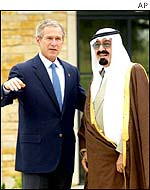
The shift in the Saudi position is a direct result of President Bush's new willingness to give a role to the UN. The Saudis - like others - were alarmed at the go-it-alone approach that seemed to characterise US policy only a few weeks ago. And they welcomed the new and more co-operative tone of George Bush's speech to the UN General Assembly last week. For the Bush administration, the Saudi foreign minister's remarks on CNN will be a welcome sign that opposition to a possible war against Iraq may be softening not only in Riyadh but, perhaps, in other Arab capitals too. 'International cover' The Americans have both political and logistical reasons for wanting to use the Prince Sultan Air Base - south of Riyadh - that is home to some 5,000 US military personnel.
The idea of a US-led attack against Iraq remains deeply unpopular in Saudi Arabia and throughout the Arab world. Many Saudis applauded Crown Prince Abdullah - effectively the country's ruler during the prolonged illness of King Fahd - when he said an emphatic "no" to the use of Saudi bases. US media attack There's been speculation that not all the senior princes agreed with him - and were fearful that this approach would do further damage to US-Saudi relations, which in recent months have come under severe strain. After the 11 September attacks, it took the Saudi Government several months to admit that 15 of the 19 suicide hijackers had been its own citizens. The US media, much of which has an open bias towards Israel, went to work on Saudi Arabia. Articles appeared accusing it of being a terrorist state, of being the ideological engine that drove al-Qaeda. There were calls from right-wing senators for Washington to break off ties with its biggest strategic partner in the Arab world. This fear of antagonising the US may be one of the factors behind the shift in the Saudi position. But the fact remains that most Arab rulers would still prefer not to see a new war at all. They fear not only instability in and around Iraq itself - but a backlash from popular Arab opinion. In Saudi Arabia, anti-American feeling is by no means confined to the conservative religious establishment or dissident Islamists. It is a sentiment shared by liberal Saudis too. | |
See also:  16 Sep 02 | Middle East 15 Sep 02 | Politics 14 Sep 02 | Middle East 13 Sep 02 | Middle East 13 Sep 02 | Middle East 13 Sep 02 | Media reports 12 Sep 02 | Middle East 16 May 02 | Country profiles 27 Aug 02 | September 11 one year on Internet links: The BBC is not responsible for the content of external internet sites Top Middle East stories now: Links to more Middle East stories are at the foot of the page. | |||||||||||||||||||||||||||||||||||||||||||||||||||||||||||||||||||||||||||||||||||||||||||||||||||||||||||||||||||||||||||||||||||||||||||||||||||||||||||||||||||||||||||||||||||||||||||||
| |
|  E-mail this story to a friend E-mail this story to a friend |
| |
| Links to more Middle East stories |
| | | ||
 | ||||
 | | Back to top
| ||
| ---------------------------------------------------------------------------------- To BBC Sport>> | To BBC Weather>> | To BBC World Service>> ---------------------------------------------------------------------------------- © MMIII | News Sources | Privacy |