|
 |
 | | | | | | ||||||||||||||||||||||||||||||||||||||||||||||||||||||||||||||||||||||||||||||||||||||||||||||||||||||||||||||||||||||||||||||||||||||||||||||||||||||||||||||||||||||||||||||||||||||||||||||
| | | You are in: Middle East | ||||||||||||||||||||||||||||||||||||||||||||||||||||||||||||||||||||||||||||||||||||||||||||||||||||||||||||||||||||||||||||||||||||||||||||||||||||||||||||||||||||||||||||||||||||||||||||||||
|
| | Monday, 16 September, 2002, 12:31 GMT 13:31 UK Bush turns tables on critics 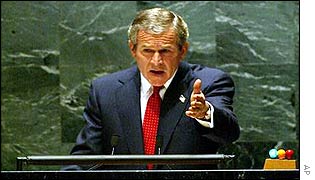 Bush managed to cast Iraq in the role of unilateralist
The whole nature of the debate over Iraq has been transformed by US President George W Bush's decision to go to the United Nations.
Those who criticised Washington for ignoring the UN are now criticising Iraq for defying it. And it will be much easier for Washington to get others to rally behind a military operation. Urging compliance Those who would not support the US acting by itself might support the UN acting collectively.
The Jordanian Foreign Minister, Marwan Muasher, said that the people of Iraq could thereby be saved from military action and the region saved from the "dire consequences" of war. Even Saudi Arabia has suggested that its attitude towards an invasion of Iraq would change if the UN supported it. Single resolution But the US still has work to do before it gets the UN to approve any military action.
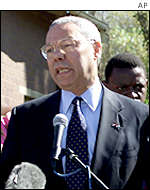
Only Britain has come out clearly in favour of an invasion and "regime change" if the UN route is blocked. Getting others on board is now the priority for US diplomacy. US Secretary of State Colin Powell, again at the forefront of US policy after his success in getting the president to give the UN a chance, said on Sunday that Washington would prefer to have a single Security Council resolution. This would, US officials say, contain an indictment of Iraq for ignoring UN demands, an ultimatum, including a deadline of a perhaps a few weeks for Iraq to comply, and a threat of action if it did not. Mr Powell accepted that others, including France, wanted two resolutions - first the warning, then the authorisation of action. He said that he did not rule out any option but Washington fears that having two stages might let Iraq off the hook by opening up a potentially fatal delay in passing a second resolution. Getting the votes The US also wants any resolution authorising force to be broadly worded, leaving the final decision on action up to the US and whatever coalition it manages to assemble. In order to get a resolution passed, the US needs to get nine of the 15 votes on the Security Council and to avoid a veto from any of the five permanent members, which are China, Russia, Britain and France apart from the US itself. The 10 temporary members are: Mauritius, Mexico, Norway, Singapore, Syria, Bulgaria, Cameroon, Colombia, Guinea and Ireland. Diplomats think that with a bit of pressure, it is not impossible for the US to get many of the temporary members on its side. And avoiding a veto is probably not an insuperable problem either. | |
See also:  16 Sep 02 | Middle East 15 Sep 02 | Politics 14 Sep 02 | Middle East 13 Sep 02 | Middle East 13 Sep 02 | Middle East 13 Sep 02 | Media reports 12 Sep 02 | Middle East 16 May 02 | Country profiles 27 Aug 02 | September 11 one year on Internet links: The BBC is not responsible for the content of external internet sites Top Middle East stories now: Links to more Middle East stories are at the foot of the page. | ||||||||||||||||||||||||||||||||||||||||||||||||||||||||||||||||||||||||||||||||||||||||||||||||||||||||||||||||||||||||||||||||||||||||||||||||||||||||||||||||||||||||||||||||||||||||||||||
| |
|  E-mail this story to a friend E-mail this story to a friend |
| |
| Links to more Middle East stories |
| | | ||
 | ||||
 | | Back to top
| ||
| ---------------------------------------------------------------------------------- To BBC Sport>> | To BBC Weather>> | To BBC World Service>> ---------------------------------------------------------------------------------- © MMIII | News Sources | Privacy |