|
 |
 | | | | | | |||||||||||||||||||||||||||||||||||||||||||||||||||||||||||||||||||||||||||||||||||||||||||||||||||||||||||||||||||||||||||||||||||||||||||||||||||||||||||||||||||||||||||||||||||||||||||||||||||||||||||||||||||||||||||||||||||||||||
| | | You are in: Middle East | |||||||||||||||||||||||||||||||||||||||||||||||||||||||||||||||||||||||||||||||||||||||||||||||||||||||||||||||||||||||||||||||||||||||||||||||||||||||||||||||||||||||||||||||||||||||||||||||||||||||||||||||||||||||||||||||||||||||||||
|
| | Wednesday, 17 July, 2002, 11:06 GMT 12:06 UK Saddam's twin-track strategy 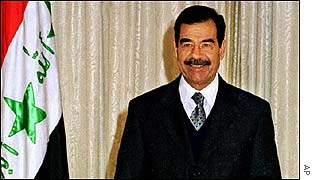 Saddam Hussein: Policy of divide and defend
On the one hand, he is as aggressive as ever towards the United States and its "lackeys."
He says that "the foreigner will not let the (Arab) nation heal its wounds and rise above its differences". His aim seems to be to undermine the will of other Arab countries to support any American-led action against Iraq. Divide and defend It is a policy of divide and defend - by dividing his opponents, he makes the defence of Iraq easier.
There is some evidence that he is having some success with Syria, which joined in the Gulf War against Saddam in 1991 but which now is the subject of US criticism in the war on terror. The London-based newspaper Al-Arab al-Alamiyah said on 16 July that "informed political observers have pointed to the Syrian government's increasing wish to boost its distinguished relations with Iraq." "Analysts believe that decision makers in Syria are certain now of the US administration's evil intentions not only towards Baghdad but also with regard to Syria," the newspaper said. Entrenched attitudes A look at the language of the speech and the interview indicate how deeply entrenched the Iraqi leader's attitudes are and how he is trying to rally Arab opinion to his side.
There is another passage: "The wind will blow away foreign rattling as the noise of an evil covetous tyrant, the enemy of Allah... Iraq will emerge eventually triumphant". That is the message for the United States. Hint of weakness? Another section of his speech should not be overlooked. He himself calls it "the most important part of what I wanted to say in this address".
The implication of this rallying call is that he himself has not been subject to the "lures" of life and that he is as strong as before. But is he also hinting at weaknesses within his regime? He did not elaborate in this passage. Signal to Arab world The interview given to the Arab papers is important for two reasons - because it is so unusual and for the signal it sent. He declares that he wants to "turn a new leaf in the history of inter-Arab relations". He even mentions Kuwait, saying that "the closer we came to settling our relations with Kuwait, the more the forces of evil hampered this rapprochement". He warns his Arab colleagues that, "the whole Arab nation is a target". This is not the battle of Iraq but of the whole Arab nation," he says. And he also blames divisions within the Arab world. "The problem with our nation is that while its enemies face it as one nation, Arab rulers do not face the enemies the same way". The picture that emerges is one of the traditional Saddam Hussein standing his ground but also of the tactical Saddam Hussein, working to out-manoeuvre his opponents. | |
See also:  17 Jun 02 | Middle East 15 Jul 02 | Middle East 11 Jul 02 | Politics 09 Jul 02 | Middle East 15 Jul 02 | Middle East 12 Jul 02 | Middle East 16 Jul 02 | Politics Internet links: The BBC is not responsible for the content of external internet sites Top Middle East stories now: Links to more Middle East stories are at the foot of the page. | |||||||||||||||||||||||||||||||||||||||||||||||||||||||||||||||||||||||||||||||||||||||||||||||||||||||||||||||||||||||||||||||||||||||||||||||||||||||||||||||||||||||||||||||||||||||||||||||||||||||||||||||||||||||||||||||||||||||||
| |
|  E-mail this story to a friend E-mail this story to a friend |
| |
| Links to more Middle East stories |
| | | ||
 | ||||
 | | Back to top
| ||
| ---------------------------------------------------------------------------------- To BBC Sport>> | To BBC Weather>> | To BBC World Service>> ---------------------------------------------------------------------------------- © MMIII | News Sources | Privacy |