|
 |
 | | | | | | ||||||||||||||||||||||||||||||||||||||||||||||||||||||||||||||||||||||||||||||||||||||||||||||||||||||||||||||||||||||||||||||||||||||||||||||||||||||||||||||||||||||||||||||||
| | | You are in: Middle East | ||||||||||||||||||||||||||||||||||||||||||||||||||||||||||||||||||||||||||||||||||||||||||||||||||||||||||||||||||||||||||||||||||||||||||||||||||||||||||||||||||||||||||||||||||
|
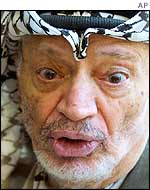
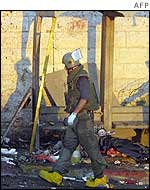
| | Friday, 21 June, 2002, 14:10 GMT 15:10 UK Arafat 'accepts' Clinton peace plan Israel is moving back into West Bank areas Palestinian leader Yasser Arafat has said peace with Israel is still possible despite a spate of suicide bombings and renewed Israeli military action in the West Bank. In an interview with the Israeli newspaper Ha'aretz, Mr Arafat also says he is now prepared to accept a Middle East peace plan put forward by former US president Bill Clinton in December 2000.
Mr Arafat also issued a call for "no more war" and blamed "foreign" forces for encouraging suicide bombers by giving money to their families. He said that, if given permission, he would apologise personally to the families of Israeli victims. The Palestinian leader, speaking at his headquarters in the West Bank city of Ramallah, said he believed it was still possible to reach an agreement with Israeli Prime Minister Ariel Sharon. Hope of compromise He said that Mr Sharon had been prepared to dismantle Jewish settlements in the Sinai under the Camp David agreements in 1979, and that when he was Israeli foreign minister he had backed the agreement that Clinton had worked out with then prime minister Benjamin Netanyahu. The plan does not recognise the right of Palestinian refugees to return to Israel, which is one of the most contentious issues holding up a settlement. Israel refuses to accept the refugees' right of return to anywhere else but the West Bank and Gaza, fearing it would wipe out Israel's Jewish character. It is the first time Mr Arafat has declared his acceptance of the Clinton proposal - previously Palestinians had accepted the plan with deep reservations. On territorial issues, Mr Arafat said he backed border corrections and the exchange of land and that he supported Israeli sovereignty over, and access to, the Western Wall in Jerusalem and the Old City's Jewish Quarter.
He said he was willing to follow in the footsteps of Jordan's late King Hussein, who made personal calls of condolence to the families of victims of a shooting attack at Naharayim in 1996. Mr Arafat said that two families of suicide bombers from Jenin had been given $30,000 each from foreign sources. Hamas arrest Answering criticism that he has not done enough to curb militants, the Palestinian leader said he had imposed a house arrest on Hamas leader Sheikh Ahmed Yassin in Gaza. Mr Arafat said he had not yet received any information from the US about proposals for a provisional Palestinian state but he did not rule one out. He added that he had not ruled out another initiative which included the declaration of a Palestinian state to be followed by negotiations on borders, Jerusalem and refugees. | |
See also:  21 Jun 02 | Middle East 20 Jun 02 | Americas 19 Jun 02 | Middle East 18 Jun 02 | Middle East 18 Jun 02 | Middle East 19 Jun 02 | Middle East Internet links: The BBC is not responsible for the content of external internet sites Top Middle East stories now: Links to more Middle East stories are at the foot of the page. | ||||||||||||||||||||||||||||||||||||||||||||||||||||||||||||||||||||||||||||||||||||||||||||||||||||||||||||||||||||||||||||||||||||||||||||||||||||||||||||||||||||||||||||||||
| |
|  E-mail this story to a friend E-mail this story to a friend |
| |
| Links to more Middle East stories |
| | | ||
 | ||||
 | | Back to top
| ||
| ---------------------------------------------------------------------------------- To BBC Sport>> | To BBC Weather>> | To BBC World Service>> ---------------------------------------------------------------------------------- © MMIII | News Sources | Privacy |