|
 |
 | | | | | | ||||||||||||||||||||||||||||||||||||||||||||||||||||||||||||||||||||||||||||||||||||||||||||||||||||||||||||||||||||||||||||||||||||||||||||||||||||||||||||||||||||||||||||||||||||||||||||||||||||||||||||||||||
| | | You are in: Middle East | ||||||||||||||||||||||||||||||||||||||||||||||||||||||||||||||||||||||||||||||||||||||||||||||||||||||||||||||||||||||||||||||||||||||||||||||||||||||||||||||||||||||||||||||||||||||||||||||||||||||||||||||||||||
|
| | Saturday, 8 June, 2002, 03:34 GMT 04:34 UK Mubarak presents peace plan to Bush Mr Mubarak has already met Colin Powell Egyptian President Hosni Mubarak is in the United States to meet George W Bush and put forward his new peace plan for the Middle East. The two men are meeting at Camp David, just outside Washington, and their talks will continue into Saturday. The BBC's Washington correspondent Jon Leyne says Mr Mubarak is being given the honour of a meeting at the presidential retreat as one of America's key Arab allies.
Mr Mubarak met Vice-President Dick Cheney and other top US officials on Friday to discuss the situation in the Middle East. Statehood His proposals call for the creation of a Palestinian state early next year. Under the plan, outstanding issues such as final borders and the return of Palestinian refugees are to be settled by negotiations at a later date. He outlined his peace plan in an interview published in The New York Times. Mr Mubarak's timetable includes:
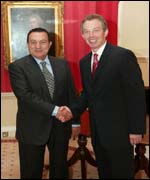
Only negotiation During a stopover in the UK en route to Washington, the Egyptian leader held talks with Prime Minister Tony Blair, and the two agreed on the importance of restarting a political process.
He was reacting to news of the suicide attack at Megiddo Junction in northern Israel which left 17 people dead. Mr Blair, for his part, said that neither Israel nor the Palestinians were "going to disappear". "I think it's important to get a process under way, but we need to prepare the ground for it," he said. Working together The BBC's Jon Leyne says Mr Mubarak's plan is bound to be seen as a rival to the Saudi peace plan, which proposes that Israel would return to its 1967 borders in return for the normalisation of relations with its neighbours. Mr Mubarak told the New York Times he believed that it was best to declare a state "theoretically" and then to sit and negotiate borders and the future of Jerusalem, Israeli settlements and the refugee situation. The thorny issues which bedevilled previous peace negotiations would be postponed until the Palestinian state had been recognised by the UN.
Arab officials know that any new Palestinian leader now would be seen as having been imposed by Israel - yet another sign of defeat. Mr Mubarak's proposals are the most detailed so far from an Arab leader. The BBC's Heba Saleh in Cairo says they amount to a counter-proposal to the idea of the Middle East conference promoted by Israel and the United States, which according to American officials could be held next month in Turkey. Our correspondent says the Arabs are worried that Israel would use the conference to start yet more interminable negotiations, leaving the occupation in place. | |
See also:  07 Jun 02 | Middle East Internet links: The BBC is not responsible for the content of external internet sites Top Middle East stories now: Links to more Middle East stories are at the foot of the page. | ||||||||||||||||||||||||||||||||||||||||||||||||||||||||||||||||||||||||||||||||||||||||||||||||||||||||||||||||||||||||||||||||||||||||||||||||||||||||||||||||||||||||||||||||||||||||||||||||||||||||||||||||||
| |
|  E-mail this story to a friend E-mail this story to a friend |
| |
| Links to more Middle East stories |
| | | ||
 | ||||
 | | Back to top
| ||
| ---------------------------------------------------------------------------------- To BBC Sport>> | To BBC Weather>> | To BBC World Service>> ---------------------------------------------------------------------------------- © MMIII | News Sources | Privacy |