|
 |
 | | | | | | ||||||||||||||||||||||||||||||||||||||||||||||||||||||||||||||||||||||||||||||||||||||||||||||||||||||||||||||||||||||||||||||||||||||||||||||||||||||||||||||||||||||||||||||||||||||||||
| | | You are in: Middle East | ||||||||||||||||||||||||||||||||||||||||||||||||||||||||||||||||||||||||||||||||||||||||||||||||||||||||||||||||||||||||||||||||||||||||||||||||||||||||||||||||||||||||||||||||||||||||||||
|
| | Friday, 24 May, 2002, 15:12 GMT 16:12 UK Bethlehem exile defends Arafat It took five weeks to resolve the siege in Bethlehem
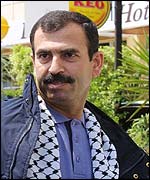
One of the 13 Palestinians sent into exile as part of the deal to end the siege at the Church of the Nativity in Bethlehem has defended Yasser Arafat's role in the negotiations. Speaking for the first time about how the agreement was brokered, Abdullah Daoud denied reports that Mr Arafat had been responsible for the accord which sent the men into exile and for which he has been heavily criticised.
According to Israel, he is the most dangerous of the men to be sent into exile. He was head of the Palestinian Authority's intelligence unit in Bethlehem and the most senior official shut up in the church for five weeks. He denies being involved in attacks on civilians and says he, like the other 12 exiles, is just an ordinary man. Mr Daoud is the only one of the 13 Palestinians who has yet to be offered a home by a European Union country, and is being kept in a safe house in the capital, Nicosia. 'Arafat against the deal' The exiled Palestinian was brought out of hiding for an hour to speak to a small group of journalists at a Nicosia coffee shop.
Many Palestinians have been highly critical of Yasser Arafat's role in the negotiations, believing that by agreeing to Israel's demands for the men to be sent away he was establishing a bad precedent. "President Arafat refused the idea in principle," Mr Daoud said. "But after we appealed to him he agreed to consider the proposals. We are the ones who bear the responsibility." He added that those inside the church agreed to the deal to enable the curfew on the whole town of Bethlehem to be lifted. If the siege had continued, Mr Daoud said, it would have resulted in irreparable damage to a building which "is sacred to all Palestinians" . Exile again This is the Palestinian intelligence chief's second time in exile. He previously spent three years in Tunisia. He is philosophical about where he might end up. He would like it if his wife and two children could join him at his final destination - but he is largely indifferent about where that might be. "We all agreed that we would accept the European Union's decision," he said. "After being forced to leave Palestine, any country is the same for me." Mentally at least he is still in Bethlehem, his mobile phone rang constantly during our conversation with calls from home. Mr Daoud seemed relaxed as he talked, but recalling the events leading up to his departure from the West Bank was obviously difficult for him. "It was just chance that I ended up in the church," he said. "There was nothing planned about it." Asked what his first actions were on arriving in Cyprus, Mr Daoud replied: "I took a shower. After 40 days living with 250 people who were not able to wash you can imagine that was what we all wanted to do first." | |
See also:  22 May 02 | Middle East 10 May 02 | Middle East 15 May 02 | Middle East 10 May 02 | Middle East 12 May 02 | Middle East Internet links: The BBC is not responsible for the content of external internet sites Top Middle East stories now: Links to more Middle East stories are at the foot of the page. | ||||||||||||||||||||||||||||||||||||||||||||||||||||||||||||||||||||||||||||||||||||||||||||||||||||||||||||||||||||||||||||||||||||||||||||||||||||||||||||||||||||||||||||||||||||||||||
| |
| Links to more Middle East stories |
| | | ||
 | ||||
 | | Back to top
| ||
| ---------------------------------------------------------------------------------- To BBC Sport>> | To BBC Weather>> | To BBC World Service>> ---------------------------------------------------------------------------------- © MMIII | News Sources | Privacy |