
|
 |
 | | | | | ||||||||||||||||||||||||||||||||
| | You are in: World: Middle East | ||||||||||||||||||||||||||||||||||
 | | Thursday, 28 February, 2002, 15:01 GMT Saudi looks to repair dented image 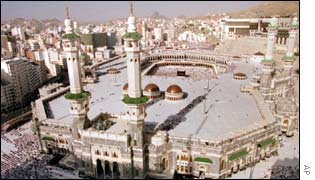 US troops in Saudi has been a source of discontent
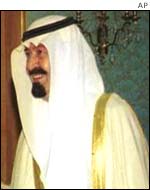
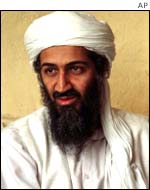
Saudi Crown Prince Abdullah's Middle East peace initiative comes against a backdrop of a sharp deterioration in the kingdom's relations with the United States after the terror attacks on New York and Washington. US commentators at the time were quick to note that Osama Bin Laden and nearly half of the 11 September hijackers came from Saudi Arabia, and questions inevitably followed about exactly what the kingdom was doing to curb its home-grown brand of religious extremism.
US support for the Israeli Government of Ariel Sharon has also placed an increasing strain on the long-standing US-Saudi friendship. The Palestinian issue was the source of a dramatic US rebuff to a Saudi gesture of friendship last October, when New York's then mayor Rudy Giuliani angrily returned a donation from Prince Al-Walid bin Talal bin Abdul Aziz - a nephew of King Fahd - intended to help rebuild the city.
Crown Prince Abdullah's initiative is clearly an attempt to find common ground with the Bush administration and follows a concerted public relations campaign by the kingdom to try to repair the damage to its image in the United States. Outlining his ideas to the New York Times, the prince said he had intended to present them in a speech to the forthcoming Arab summit in Beirut at the end of this month, but that the escalation in violence in the Middle East had caused him to hesitate. Hostility towards Israel Saudi strategic analyst Nawaf Obaid says that since the New York Times article was published, the initiative has taken on a momentum that was never intended and has left the Saudi religious establishment in a state of shock. Nor was the rest of the Saudi Government consulted on the proposal, says Mr Obaid. While Crown Prince Abdullah - who wields day-to-day control due to the ill health of King Fahd - has the power to bring other members of the government onside, it is doubtful whether his ideas will find favour with the kingdom's conservative religious establishment.
Mr al-Faqih says an unofficial poll of male university and high school students in the kingdom at the time of the outbreak of the Palestinian intifada in the autumn of 2000 showed that more than 70% were willing to take part in a 'jihad' to liberate Palestine. Young and bored A high birth rate and slow pace of economic reform in the kingdom has led to growing youth unemployment, in spite of the country's oil wealth, and disaffected youths have increasingly turned to radical religious institutions for inspiration. The events of 11 September "pulled the carpet from under the regime, which shrank in stature in the eyes of the Saudi people compared to Osama Bin Laden", says Mr al-Faqih.
But Nawaf Obaid says the threat to the stability of the regime has been overplayed by the Western media and that young people in Saudi Arabia are bored, rather than disaffected, and certainly not politically organised. While the extent of internal dissent is unclear, there is little doubt that both the Saudi elite, many of whom have been educated in the US and have strong US business ties, and less well-off people in the kingdom are united in their dismay over US policy towards Israel. The other issue that potentially divides the US and Saudi governments and which has been used as a rallying cry by radical Islamic opponents of the royal family is the presence of American troops on "sacred" Saudi soil. US troops According to Mr Obaid, there is a tacit understanding between both governments that US troops should leave the kingdom. But there are reasons why both sides need to maintain the US troop presence in the short term. As long as the Iraqi leader, Saddam Hussein, poses a threat to security in the region, Washington feels it has little alternative but to retain the 5,000 troops it has stationed at Prince Sultan air base. For the Saudi rulers, a US troop withdrawal now would present a propaganda gift to supporters of Bin Laden. Crown Prince Abdullah may now be hoping that if his peace initiative helps bring a halt to the daily images of Palestinian suffering in the Arab media, this will calm passions in the region and lend greater credibility to his regime. Given the enthusiasm with which the US has welcomed the initiative, it may be that he has, almost inadvertently, hit upon a formula that could break the Middle East deadlock. Much will depend on the reception his ideas receive in the rest of the Arab world. | |
See also:  Internet links: The BBC is not responsible for the content of external internet sites Top Middle East stories now:  Links to more Middle East stories are at the foot of the page. | ||||||||||||||||||||||||||||||||
|
Links to more Middle East stories |
 | | ^^ Back to top News Front Page | World | UK | UK Politics | Business | Sci/Tech | Health | Education | Entertainment | Talking Point | In Depth | AudioVideo ---------------------------------------------------------------------------------- To BBC Sport>> | To BBC Weather>> ---------------------------------------------------------------------------------- © MMIII|News Sources|Privacy  |





 E-mail this story to a friend