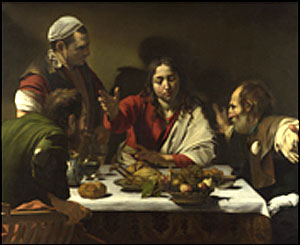
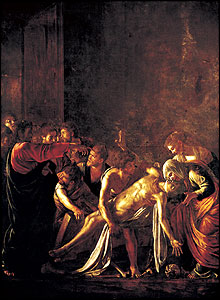
1 of 10 The Supper at Emmaus (1601) is one of fifteen paintings at an exhibition, opening on Wednesday, at The National Gallery, London. It charts the last four years in the life of 17th Century Italian painter Michelangelo Merisi da Caravaggio.
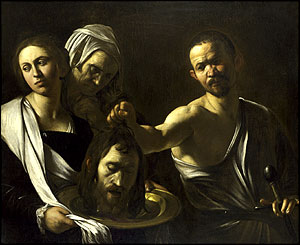
2 of 10 Salome receives the Head of Saint John the Baptist was painted over three years between 1607 and 1610 when Caravaggio was in his late thirties.
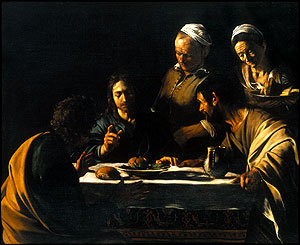
3 of 10 This second version of The Supper at Emmaus was painted five years after the original, shortly after the artist fled Rome in 1606 after killing an adversary in a duel.
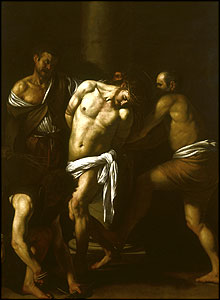
4 of 10 The Flagellation was painted in 1607 and shows traits of the compelling realism which characterised Caravaggio's work.
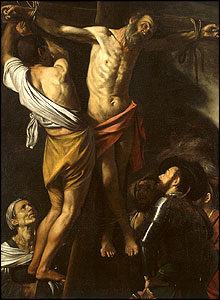
5 of 10 The Crucifixion of Saint Andrew (1606-7) is on loan from The Cleveland Museum of Art and demonstrates the artist's use of expressive lighting to dramatic effect.
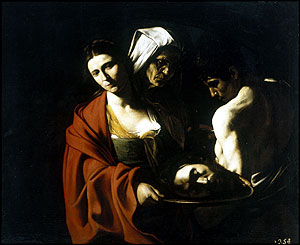
6 of 10 Caravaggio painted this version of Salome with the Head of Saint John the Baptist between 1606 and 1607, during which time he travelled around Naples, Malta and Sicily.
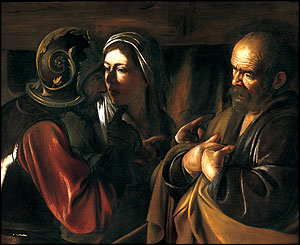
7 of 10 On loan from The Metropolitan Museum of Art, New York, The Denial of Saint Peter was painted around 1610.
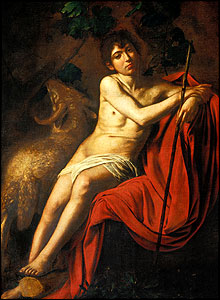
8 of 10 Caravaggio left Rome under the threat of capital punishment and quickly developed a mature style in the years before his death, painting Saint John the Baptist around 1610.
9 of 10 Caravaggio is celebrated as the first great realist and has become a modern icon. He painted The Raising of Lazarus between 1608 and 1609.
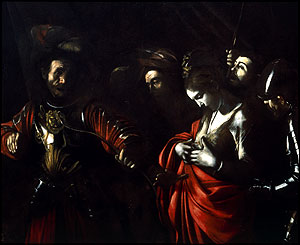
10 of 10 The Martyrdom of Saint Ursula, 1610, was Caravaggio's last painting before his mysterious death, whilst on his way back to Rome with the promise of a papal pardon. The exhibition runs until 22 May.


 One-Minute World News
  News services

 E-mail this to a friend