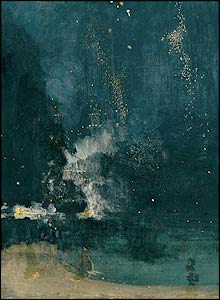
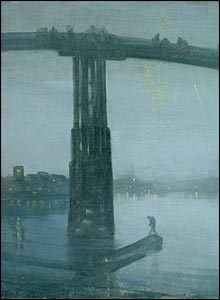
1 of 9 Tate Britain is holding a joint exhibition of three of Europe's greatest 19th Century artists in the Turner Whistler Monet show. Among the works on show are Whistler's Nocturne in Black and Gold: The Falling Rocket (1875).
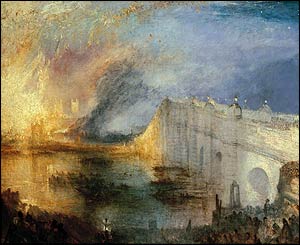
2 of 9 The exhibition, which runs from 10 February-15 May, showcases some of the best of the trio's work, including Turner's Burning of the House of Lords and Commons (1835).
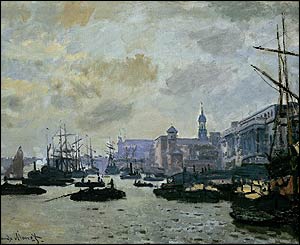
3 of 9 Claude Monet, painter of Pool of London (1906), and James Abbot McNeill Whistler were friends and collaborators, both contributing to the development of Impressionism in the 1870s.
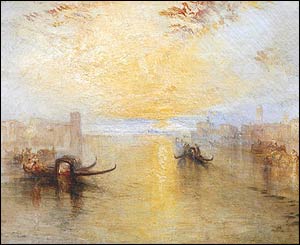
4 of 9 They were great admirers of British artist JMW Turner and his paintings, such as San Benedetto (1843), and drew on his work to create a new movement.
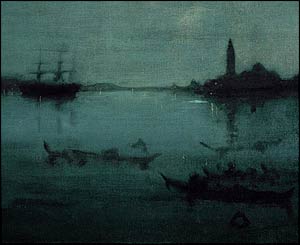
5 of 9 The exhibition focuses on views of the River Thames, the Seine and the city of Venice, such as Whistler's Lagoon, Venice (1879-80).
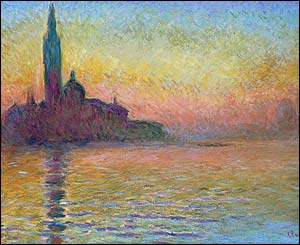
6 of 9 Monet's San Giorgio Maggiore at Dusk (1908) captures the view of the church near St Mark's Square.
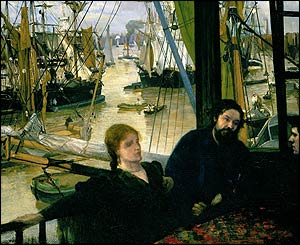
7 of 9 Whistler began work on Wapping in 1860, having moved to the area of London, but did not consider it finished until four years later.
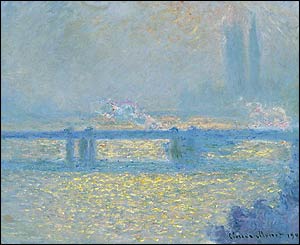
8 of 9 Monet, who lived in London around 1870, used Charing Cross Bridge as his inspiration for a number of paintings, experimenting with natural light.
9 of 9 Whistler used Battersea Bridge to experiment in colour in works such as Nocturne in Blue Gold - Old Battersea Bridge (1872-5).


 One-Minute World News
  News services

 E-mail this to a friend