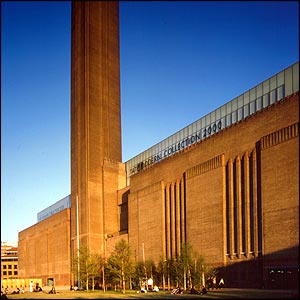
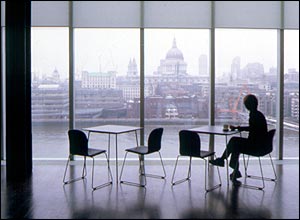
1 of 9 The Tate Modern, which is celebrating its fourth anniversary, was built as a centre for the best of the capital's modern art in a disused power station on London's South Bank.
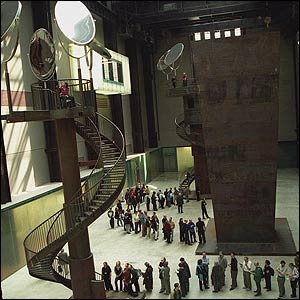
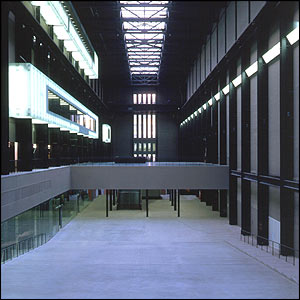
2 of 9 The gallery's Turbine Hall has seen some impressively large art pieces in the last four years. One of them was Louise Bourgeoise's sculpture I Do I Undo, which was shown in 2000.
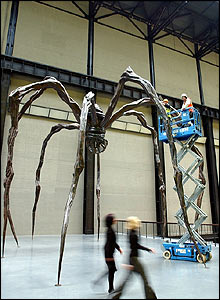
3 of 9 Even Bourgeois' 30ft spider sculpture had plenty of room in the vast hall, which has gone on display for a second time until 30 August.
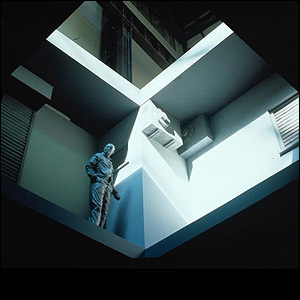
4 of 9 Double Blind, by the Spanish artist Juan Munoz, was one of 2001's most popular exhibits. The multi-level sculpture was different according to where viewers looked at it from.
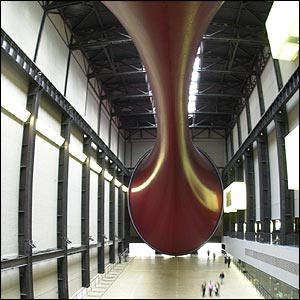
5 of 9 One of the most celebrated pieces to have appeared at the Tate Modern in 2002 was Anish Kapoor's Marsyas. The enormous, trumpet-shaped piece was one of the world's biggest indoor sculptures.
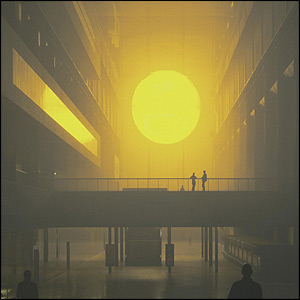
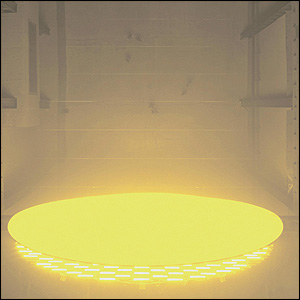
6 of 9 The giant, foggy sun housed in the Tate was an enormous hit in 2003 and 2004. The installation, by Danish artist Olafur Eliasson, attracted more than one million visitors in two months.
7 of 9 The installation, which was in the massive Turbine Hall, was the cause of some controversy. Some staff said the project, which used mirrors, lights and mist, made them feel ill.
8 of 9 Since its launch in 2000, Tate Modern has become one of the biggest tourist draws in the city, with free entrance to its main exhibition spaces.
9 of 9 The top of the gallery has become a popular cafe and meeting point, offering panoramic views of the north bank of the Thames.
 Home
Home


 BBC NEWS CHANNEL
 News services

 E-mail this to a friend