1 of 7 Two-thirds of Rwanda's qualified teachers were killed or exiled in the 1994 genocide. Five years ago the Education Ministry called on VSO to send volunteer teachers. A photographer has visited schools to see what progress has been made.
2 of 7 Since 1994, the numbers of students attending secondary education has increased five-fold - to 200,000. Before the genocide, girls were not encouraged to go to school but today more girls than boys receive an education.
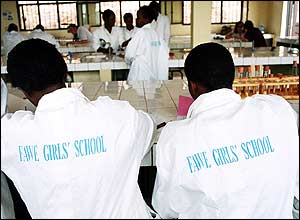
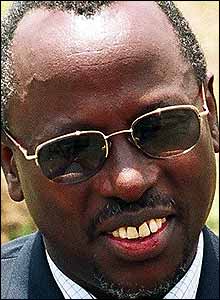
3 of 7 Mr Rwagatare is the head teacher at the Forum for African Women Educationalists (FAWE) school in the capital Kigali. "One of the things we try to do at the school is build the confidence and self-esteem of the girls," he says.
4 of 7 A VSO volunteer at the school, Sally Donaldson, believes he has been successful. "These girls are very strong and I would have faith that they would really be able to fight against prejudice."
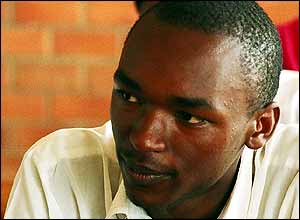
5 of 7 Former genocide refugee, Joseph Nainyibizi, is a pupil at the St Andre School in Kigali. He believes that Rwandans have to work together to rebuild the country. "There are no Tutsi, no Hutus, we are all the same. Rwandan"
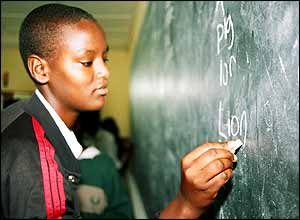
6 of 7 The first class of fully-trained teachers are soon to graduate from Kigali Institute of Education and this FAWE school student believes that Rwandan children "realise that it is important to study".
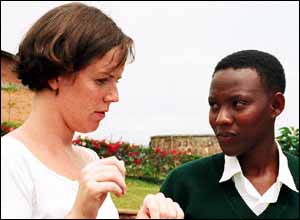
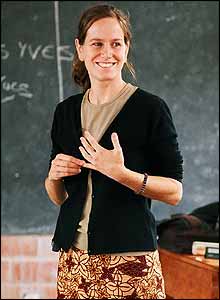
7 of 7 VSO volunteer Tracey Riches is impressed by the determination shown by her pupils. "Pupils here are proactive; it's quite possible that you will see future leaders of Rwanda."


 One-Minute World News
  News services
 E-mail this to a friend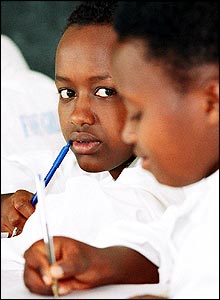


 Key reports