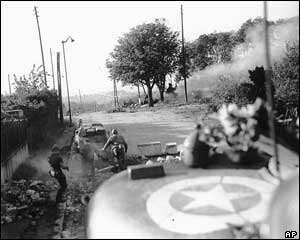
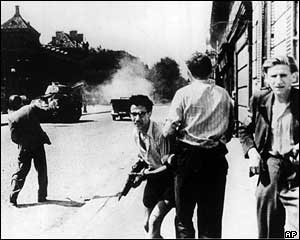
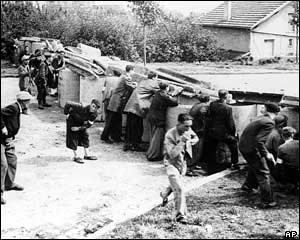
1 of 8 This week sees the 60th anniversary of the liberation of Paris in World War II. After D-Day it took the Allies more than two months to advance to the city's outskirts.
2 of 8 Allied commander Dwight Eisenhower did not relish a fight for Paris and wanted to bypass the city. But French General Charles de Gaulle had other ideas and ordered his forces to take the city, so the Americans followed.
3 of 8 Parisians rose in revolt against their occupiers and helped disrupt the German defences to speed the Allied advance.
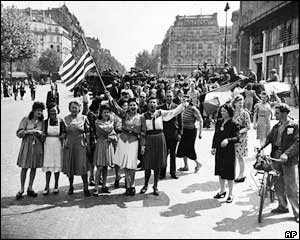
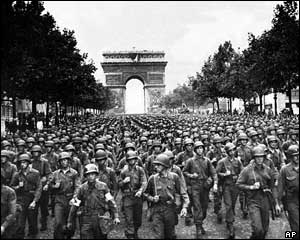
4 of 8 Liberation! French civilians with their hastily made American and French flags sing the Star Spangled Banner as they greet US and Free French troops entering Paris on 25 August 1944.
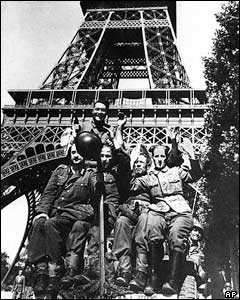
5 of 8 US soldiers celebrate the capture of Paris as they guard German prisoners of war by the Eiffel Tower.
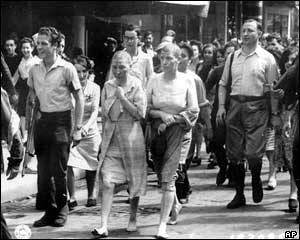
6 of 8 For some the liberation meant humiliation. Suspected of collaborating with German soldiers under the occupation, these two women have their heads shaved and the Swastika sign painted on their foreheads.
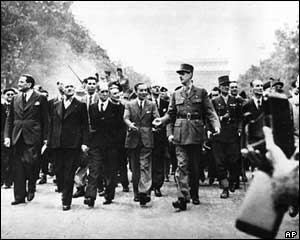
7 of 8 To stamp his authority on the leadership of France, General Charles de Gaulle organised a huge victory parade and led it through the streets of Paris.
8 of 8 It was not the end of the war but a major milestone. Despite more bitter fighting ahead, Germany was now in full retreat.


 One-Minute World News
  News services

 E-mail this to a friend