|
 |
 | | | | | | ||||||||||||||||||||||||||||||||||||||||||||||||||||||||||||||||||||||||||||||||||||||||||||||||||||||||||||||||||||||||||||||||||||||||||||||||||||||||||||||||||||||||||
| | | You are in: In Depth: September 11 one year on | ||||||||||||||||||||||||||||||||||||||||||||||||||||||||||||||||||||||||||||||||||||||||||||||||||||||||||||||||||||||||||||||||||||||||||||||||||||||||||||||||||||||||||||
|
| |  Monday, 2 September, 2002, 09:42 GMT 10:42 UK Monday, 2 September, 2002, 09:42 GMT 10:42 UK Defence industry boost  Light at the end of a 20 year tunnel for arms makers
The use of kerosene laden passenger jets to attack the US financial and military targets, gave the languishing arms industry its biggest boost in 20 years. After 11 September, defence stocks jumped in anticipation of increased defence spending, the war on Afghanistan and as a safe haven from the overall stock market falls. The arms industry is unlike any other, supplying the means of death and destruction to effectively one type of customer, national governments.
"We believe we are recession proof, we work on a different cycle, the fundamentals if anything have got stronger over the last months," he said. The US defence budget, the biggest in the world, is expected to increase by $35bn to $350bn in autumn and grow to $400bn per annum over the next five years. Arms makers are falling over themselves to secure some of the $68.7bn for new equipment and $53.9bn in research and development on offer. Even Europe has shown an inclination to spend more. Britain led the way in July, increasing its defence budget by �3.5bn over three years to an annual �32.8bn. All about electronics A new buzzword, "network centric warfare", embodies the arms industry's resurgence. US Defence Secretary Donald Rumsfeld says it is all about the "transformation" of lumbering armed forces into light and agile organisations connected with the latest communications equipment and computer software.
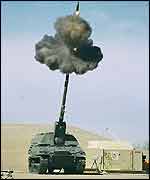
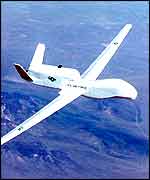
"What defence department's want is integrated systems, which is the glue that holds it all together." In that spirit, Mr Rumsfeld has cancelled the $90bn Crusader army cannon in mid-programme and other candidates for the chop include the tilt-rotor V22 Osprey plane and Comanche helicopter. Drones away Drones, or unmanned aerial vehicles (UAVs), like the Global Hawk or the Predator, have become the flavour of the moment.
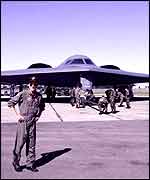
"We believe UAVs will be significant part of our business in the future, there is procurement money coming," added Northrop's Ron Sugar. They cut the risk of US casualties, offer a low-cost intelligence gathering alternative to spy planes or satellites, and are being armed for combat. Corporate defence In the US, the major defence contractors have already transformed themselves. Only five majors remain - Lockheed Martin, Boeing, Northrop Grumman, Raytheon and General Dynamics - from 18 during the Cold War. Northrop Grumman, the maker of the B2 bomber and the much hyped Global Hawk, embodies the new defence company.
"When the Cold War ended, the company was fundamentally just building B2 bombers, but we developed a sense that electronic warfare information technology and networking of systems was going to be the future," said Mr Sugar. Spoils of war After being written-off as a has been, Northrop Grumman has just reported a profit rise of 4%. Lockheed Martin, the world's biggest defence contractor and integrated systems specialist, has recorded a 5.4% rise, while General Dynamics, maker of tanks, submarines and destroyers, jumped nearly 16% due to its combat systems unit. The increased defence spending also comes at a good time for defence contractors in the civil aerospace industry, like Boeing and BAE Systems, where a downturn in commercial aviation has resulted in lower orders for passenger jets. Boeing's 7% fall in second quarter profits could have been much steeper if it did not also build weapons. "There's two things that have changed, on the commercial side we are experiencing the biggest downturn ever but on the defence side we've seen significant growth," said Boeing Phil Condit. European future US dominance of the industry has led European companies to express concern that unless their governments increase spending of research and development, they will become mere sub-contractors or component makers. "The investment in research and development is the big discriminator in the long term and I don't see Europe having the ability or will to invest anywhere near the US," said Mike Turner, chief executive of BAE Systems. BAE Systems now sells more to the US than the British government and has expanded into the US market by buying three companies sold by Lockheed Martin. The US has been encouraging foreign participation in defence contracting, by easing controls on joint ventures, to promote competition because of the reduction in the number of contractors. "It's all to do with partnership," said Gareth Evans. "European companies have been trying to establish themselves in the US and there's been some interesting alliances and partnerships." | |
See also:  02 Aug 02 | Americas 22 Jul 02 | Business 10 Jul 02 | Business 01 Jul 02 | Business 28 May 02 | Business Internet links: The BBC is not responsible for the content of external internet sites Top September 11 one year on stories now: Links to more September 11 one year on stories are at the foot of the page. | ||||||||||||||||||||||||||||||||||||||||||||||||||||||||||||||||||||||||||||||||||||||||||||||||||||||||||||||||||||||||||||||||||||||||||||||||||||||||||||||||||||||||||
| |
|  E-mail this story to a friend E-mail this story to a friend |
| |
| Links to more September 11 one year on stories |
| | | ||
 | ||||
 | | Back to top
| ||
| ---------------------------------------------------------------------------------- To BBC Sport>> | To BBC Weather>> | To BBC World Service>> ---------------------------------------------------------------------------------- © MMIII | News Sources | Privacy |