|
 |
 | | | | | | ||||||||||||||||||||||||||||||||||||||||||||||||||||||||||||||||||||||||||||||||||||||||||||||||||||||||||||||||||||||||||||||||||||||||||||||||||||
| | | You are in: In Depth: dot life | ||||||||||||||||||||||||||||||||||||||||||||||||||||||||||||||||||||||||||||||||||||||||||||||||||||||||||||||||||||||||||||||||||||||||||||||||||||||
|
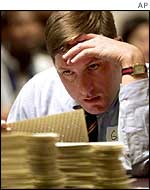
| |  Monday, 17 February, 2003, 12:29 GMT Monday, 17 February, 2003, 12:29 GMTDoubts over the new democracy  Recounts prove crucial in some elections
 Until now national and local elections have stayed largely free of computers, electronics and the internet. Many European countries tally votes with machines, but the actual act of voting is done by marking a ballot paper with a pencil or punching a hole in it.
But this could be about to change. Electronic voting replaces paper ballots with dedicated machines that record a vote when a button or touch screen is pressed. Computers have been used in US elections since 1964 but the move to electronic voting has accelerated with the growing popularity of the net. Widespread worries Yet, initial experiments in "e-voting" have left a trail of concerns.
Many of the machines used in the 2000 poll have since been replaced with touch screen systems and tens of thousands of these were used in September primaries. Perhaps, not surprisingly, voters reported widespread difficulties. Some voters had to wait hours to place their ballot as machines proved faulty or broke down.
In Miami-Dade county a few machines reset themselves as they were being used, while others displayed the wrong candidates. During the US mid-term elections in 2002, nine states, including Florida, Texas, California, Georgia and New Jersey, reported problems caused by voting machines. Several websites document the extensive list of headaches experienced by voters across the US. No audit trail In Scurry County, Nebraska, a landslide was recorded for the Republican candidate but later reversed when it was found ballots had been misread. Once corrected the results showed the Democrats swept the state.
Anyone demanding a recount of an all-electronic election will get the same results the second time round because the only record is in the computers that took the votes. Yet US authorities are pressing on regardless. Dr Rebecca Mercuri, who earned her doctorate investigating e-voting, estimates America will spend about $4bn on voting machines over the next decade
Dr Mercuri has believes e-voting machines are less accountable, less reliable and more prone to fraud than existing systems. Brazil, an early convert to e-voting is trying to make amends by retro-fitting many of its machines with logging systems that provide a separate record of what people did. The lack of a permanent record of what voters did, coupled with the fact only three companies make 85% of the machines used for e-voting and a lack of uniform standards on voting machines, is causing alarm in many quarters. Growing suspicions That the errors usually, but not always, favour conservative candidates only increases the suspicions of many observers.
California secretary of state Kevin Shelley has set up an investigation into electronic voting machines. And organisations such as Vote Watch have sprung up to compile information about voting irregularities. Teenage rebels were often given to saying: 'if voting changed anything they would abolish it'. They could turn out to be right. | | See also:  23 Apr 02 | N Ireland 21 Apr 02 | England 07 Jan 02 | dot life 07 May 02 | Politics 08 Apr 02 | Science/Nature 29 Apr 02 | dot life 28 Mar 01 | Politics 16 Nov 00 | Science/Nature Internet links: The BBC is not responsible for the content of external internet sites Top dot life stories now: Links to more dot life stories are at the foot of the page. | ||||||||||||||||||||||||||||||||||||||||||||||||||||||||||||||||||||||||||||||||||||||||||||||||||||||||||||||||||||||||||||||||||||||||||||||||||||
 | |
|  E-mail this story to a friend E-mail this story to a friend |
|  |
| Links to more dot life stories |
| | | ||
 | ||||
 | | Back to top
| ||
| ---------------------------------------------------------------------------------- To BBC Sport>> | To BBC Weather>> | To BBC World Service>> ---------------------------------------------------------------------------------- © MMIII | News Sources | Privacy |






 Any first-year computing student can write code that displays one thing on the screen to the voter but records something else