|
 |
 | | | | | | |||||||||||||||||||||||||||||||||||||||||||||||||||||||||||||||||||||||||||||||||||||||||||||||||||||||||||||||||||||||||||||||||||||||
| | | You are in: Health | |||||||||||||||||||||||||||||||||||||||||||||||||||||||||||||||||||||||||||||||||||||||||||||||||||||||||||||||||||||||||||||||||||||||||
|
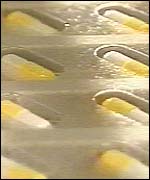
| | Wednesday, 22 January, 2003, 01:19 GMT Anti-flu pill launched in the UK  The drug could stop the spread of flu A pill which can prevent people catching flu is being launched in the UK. The drug, Tamiflu, is the only treatment which can be taken orally, in a capsule or syrup. It is the same type of drug as Relenza, but that has to be inhaled, which research has found can make it hard for elderly people to take - despite them being most likely to benefit. Flu can be fatal for vulnerable groups, such as the elderly, who can develop complications such as bronchitis and pneumonia.
Children who catch the virus can develop painful middle-ear infections, which can cause hearing problems, delaying speech development. Tamiflu and Relenza are neuraminidase inhibitors, designed specifically to target the influenza virus. They work by stopping the virus sticking onto cells in the upper respiratory tract. Normally the virus then reproduces, but neuraminidase inhibitors also stops that happening. Tamiflu was authorised centrally through a new European centralised system, rather than by individual countries. But the European Medicines Agency said Tamiflu was not a substitute for influenza vaccination 'Sitting ducks' John Oxford, professor of virology at Barts and the London, Queen Mary's School of Medicine, told BBC News Online: "This class of drugs are very powerful." He added: "Tamiflu is not more powerful than Relenza, but it could be it is easier to take, as a tablet rather than an inhaler." Professor Oxford carried out a study which found Tamiflu was effective in preventing people around a flu sufferer developing the disease themselves. It was effective in over 80% of cases. He said: "You take it when you're a 'sitting duck', when someone in your office, or a family member or a friend has flu." Professor Oxford added that targeting children could be effective. "They can often be the focus of infection, so the overall number of infections could be reduced." Resistance Professor Ron Eccles, of the Common Cold Centre in Cardiff, said it could be useful if an organisation, such as a business, wanted to cut the risk of fellow employees catching flu. He added: "You would need to know if it is influenza, because a lot of common colds masquerade as flu. "But it could be useful as a prophylactic." However, Professor Eccles said: "Treatment would need to be started within 48 hours, and it's probably going to save one or two days of illness." He added that the widespread use of the drug could lead to the development of strains of flu which were resistant to the drug. Research has indicated Tamiflu can cut the severity of flu symptoms by around 40% and their duration by 30%. Tamiflu was also shown to cut the number chest infections linked to flu needing antibiotics by 50% and hospitalisations by 61%. In children, the drug reduced the incidence of middle ear infections in those affected by flu by 44%. | | See also:  09 Jan 03 | Health 23 May 02 | Health 09 Mar 01 | Health 06 Dec 02 | Health 18 Feb 02 | Boston 2002 Internet links: The BBC is not responsible for the content of external internet sites Top Health stories now: Links to more Health stories are at the foot of the page. | |||||||||||||||||||||||||||||||||||||||||||||||||||||||||||||||||||||||||||||||||||||||||||||||||||||||||||||||||||||||||||||||||||||||
 | |
|  E-mail this story to a friend E-mail this story to a friend |
| |
| Links to more Health stories |
| | | ||
 | ||||
 | | Back to top
| ||
| ---------------------------------------------------------------------------------- To BBC Sport>> | To BBC Weather>> | To BBC World Service>> ---------------------------------------------------------------------------------- © MMIII | News Sources | Privacy |