|
 |
 | | | | | | |||||||||||||||||||||||||||||||||||||||||||||||||||||||||||||||||||||||||||||||||||||||||||||||||||||||||||||||||||||||||||||||||||||||||||||||||||||||||||||||||||||||
| | | You are in: Health | |||||||||||||||||||||||||||||||||||||||||||||||||||||||||||||||||||||||||||||||||||||||||||||||||||||||||||||||||||||||||||||||||||||||||||||||||||||||||||||||||||||||||
|
| | Friday, 13 December, 2002, 10:53 GMT Success in malaria drug tests 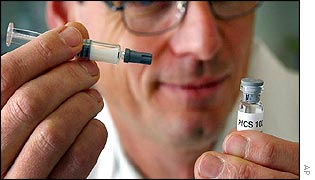 Malaria vaccine could be available in 10 years Scientists have announced promising results from tests of a new treatment for malaria patients. It could prove a valuable additional weapon at a time the malaria parasite is gaining resistance to conventional drug treatments in many parts of the world. However, further trials will be needed before it can be declared safe and effective - it has not yet been tested in children, who account for most malaria deaths in developing countries. Writing in the medical journal The Lancet, the scientists, from the University of Tubingen in Germany, say that - when they administered a particular antibiotic to malaria patients in the West African state of Gabon - up to 90% of patients recovered in two weeks.
Laboratory tests suggest it works by stopping the parasite that causes malaria from producing a chemical it needs to survive. Small groups of adult Africans already suffering from malaria were given the treatment over several days. The results have been promising - within two weeks, cure rates in different groups were reported to have been at least 60% and in some cases as high as 89%. It is early days, but the scientists say they this is a good start. Note of caution Writing in the Lancet, Dr Kremsner, from the University of Tubingen, said: "These data suggest that fosmidomycin is a safe and effective treatment for malaria in adult Africans if given for four days or more." However, he warned that the results should be interpreted cautiously as not only were the study groups small, but there was possibly an increased risk of the patient being the source of further infections after taking the drug. However, the team wants to test the antibiotic on children. Malaria has been and remains a deadly foe in sub-Saharan Africa, where a child is estimated to die from its effects every 30 seconds. Much work has been taking place over the last decade to battle it on several fronts:
An effective malaria vaccine may be available in 10 years or so, scientists hope. | |
See also:  02 Dec 02 | Health 05 May 02 | Health 02 Oct 02 | Science/Nature 22 Nov 02 | Health Internet links: The BBC is not responsible for the content of external internet sites Top Health stories now: Links to more Health stories are at the foot of the page. | |||||||||||||||||||||||||||||||||||||||||||||||||||||||||||||||||||||||||||||||||||||||||||||||||||||||||||||||||||||||||||||||||||||||||||||||||||||||||||||||||||||||
| |
|  E-mail this story to a friend E-mail this story to a friend |
| |
| Links to more Health stories |
| | | ||
 | ||||
 | | Back to top
| ||
| ---------------------------------------------------------------------------------- To BBC Sport>> | To BBC Weather>> | To BBC World Service>> ---------------------------------------------------------------------------------- © MMIII | News Sources | Privacy |