
|
 |
 | | | | | | ||||||||||||||||||||||||||||||||||||||||||||||||||||||||||||||||||||||||||||||||||||||||||||||||||||||||||||||||||||||||||||||||||||||
| | | You are in: Health | ||||||||||||||||||||||||||||||||||||||||||||||||||||||||||||||||||||||||||||||||||||||||||||||||||||||||||||||||||||||||||||||||||||||||
|
| | Friday, 13 December, 2002, 00:36 GMT Pregnancy smoking help ineffective 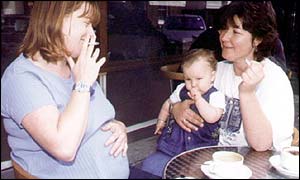 Ministers want to cut smoking in pregnancy Most women who smoke during pregnancy are unlikely to respond to self-help programmes designed to help them quit, research has found. There is evidence linking smoking in pregnancy with an increased risk of spontaneous abortion, low birth weight, sudden death and disease in babies. Ministers are committed to cutting the percentage of women who smoke during pregnancy from 23% to 15% by the year 2010. However, the latest study suggests that the target will not be met if health professionals rely on self-help programmes implemented as part of routine antenatal care. The research also suggests that it would be wrong to assume that every women who says she has quit is telling the truth. Step-by-step Researchers focused on 1,527 women who smoked at the start of their pregnancy. All received standard antenatal care, but in addition half took part in a self-help smoking cessation programme called Stop for Good. This comprised of a series of five self-help booklets setting out a way to quit smoking in a gradual step-by-step way. All women were surveyed 26 weeks into their pregnancy. Those who said they had not smoked for at least seven days supplied a urine sample to check whether that was really the case. The tests showed that just 19% of women who were counselled on how to stop smoking had actually quit. However, 26% of that group claimed to have stopped smoking. Better strategies Writing in the British Medical Journal, the researchers say that the only way to encourage more women to quit smoking is to develop more sophisticated strategies that are tailored to individual needs. They also say the current policy on relying on women to tell the truth about their smoking habits will not give an accurate picture of whether or not government targets are being met. Researcher Dr Laurence Moore, of Cardiff University School of Social Sciences, told BBC News Online that part of the reason success rates were so low might be that midwives were reluctant to push the intervention too heavily, for fear of damaging their relationship with the patient. He said: "The bottom line is that women who smoke during pregnancy are predominantly from poor social backgrounds, often single mothers with limited income. "More complex interventions that take full account of the social and cultural circumstances of this target group may be required." Fellow researcher Dr Rona Campbell said women were less likely to quit smoking during pregnancy if their partner smoked. She said: "We would like to see smoking interventions in pregnancy where there is a greater focus on paternal smoking." | | See also:  09 Jan 02 | Health 04 Jan 02 | Health 27 Nov 01 | Health Internet links: The BBC is not responsible for the content of external internet sites Top Health stories now: Links to more Health stories are at the foot of the page. | ||||||||||||||||||||||||||||||||||||||||||||||||||||||||||||||||||||||||||||||||||||||||||||||||||||||||||||||||||||||||||||||||||||||
| |
|  E-mail this story to a friend E-mail this story to a friend |
| |
| Links to more Health stories |
| | | ||
 | ||||
 | | Back to top
| ||
| ---------------------------------------------------------------------------------- To BBC Sport>> | To BBC Weather>> | To BBC World Service>> ---------------------------------------------------------------------------------- © MMIII | News Sources | Privacy |



