
|
 |
 | | | | | | ||||||||||||||||||||||||||||||||||||||||||||||||||||||||||||||||||||||||||||||||||||||||||||||||||||||||||||||||||||||||||||||||||||||||
| | | You are in: Health | ||||||||||||||||||||||||||||||||||||||||||||||||||||||||||||||||||||||||||||||||||||||||||||||||||||||||||||||||||||||||||||||||||||||||||
|
| | Tuesday, 10 December, 2002, 00:17 GMT Brain scan predicts psychosis 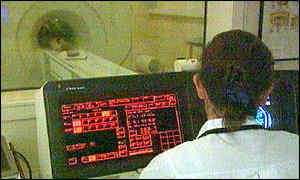 Brain scans could help to predict which people at high risk of psychosis will actually go on to develop the disorder, say scientists. Psychotic disorders such as schizophrenia are associated with changes in specific brain areas.
Researchers used MRI [magnetic resonance imaging] scans to examine the structure of the brain of people at risk of psychosis before and after the onset of illness. In total the researchers, from the University of Melbourne in Australia and the University of Cambridge, carried out scans on 75 people at high risk of psychosis. Over the following year 23 of them developed psychosis. The researchers compared scans from those in the group who later developed psychosis with those who did not. Differences Even though they were clinically indistinguishable at the start of the study, there were substantial differences between the brains of people who went on to develop psychosis and those who did not. Those who later became psychotic had less brain grey matter, mainly in the right-sided temporal and frontal lobe regions, which are associated with attention, memory, emotion, and social behaviour. These differences, the authors suggest, may be indicators of vulnerability for developing psychosis. Patients who had become psychotic also had less brain grey matter in the left temporal lobe and left frontal regions than at the start of the study. These abnormalities have previously been found in patients with schizophrenia, but this is the first example of such changes taking place as the illness first develops. Important implications Researcher Dr Christos Pantelis said it was too early to say for sure whether MRI would prove to be an effective tool for determining which people would go on to develop psychosis. But he said: "The fact that progressive changes were found during the development of the illness has important implications for the treatment of psychotic disorders. "At present, treatment is normally withheld until the clinician is confident that the patient has a psychotic disorder, although there is evidence that the longer the delay before starting treatment, the poorer the outcome. "Our data suggest that treating high-risk individuals before the onset of psychosis might minimise the brain changes we observed, and may even prevent the illness developing." Paul Corry, of the schizophrenia charity Rethink, said: "This research underlines the importance of reaching people early. "The average delay in reaching someone newly experiencing schizophrenia is 18 months. That is completely unacceptable. "This study makes clear that there needs to be further research before MRI scans could be used as a diagnostic tool, but it gives hope that timely interventions can help people recover a full and meaningful life from schizophrenia." The research is published on the website of The Lancet medical journal. | | See also:  26 Oct 02 | Health 23 Aug 02 | Health 04 Dec 02 | Health Internet links: The BBC is not responsible for the content of external internet sites Top Health stories now: Links to more Health stories are at the foot of the page. | ||||||||||||||||||||||||||||||||||||||||||||||||||||||||||||||||||||||||||||||||||||||||||||||||||||||||||||||||||||||||||||||||||||||||
| |
|  E-mail this story to a friend E-mail this story to a friend |
| |
| Links to more Health stories |
| | | ||
 | ||||
 | | Back to top
| ||
| ---------------------------------------------------------------------------------- To BBC Sport>> | To BBC Weather>> | To BBC World Service>> ---------------------------------------------------------------------------------- © MMIII | News Sources | Privacy |





