
|
 |
 | | | | | | ||||||||||||||||||||||||||||||||||||||||||||||||||||||||||||||||||||||||||||||||||||||||||||||||||||||||||||||||||||||||||||||||||||||||||||||||||||||||||||||||||||||||
| | | You are in: Health | ||||||||||||||||||||||||||||||||||||||||||||||||||||||||||||||||||||||||||||||||||||||||||||||||||||||||||||||||||||||||||||||||||||||||||||||||||||||||||||||||||||||||||
|
| | Sunday, 24 November, 2002, 22:22 GMT Test to predict heart danger 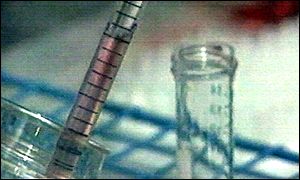 The new test could predict heart disease High frequency radio waves can be used to analyse blood samples and predict which belong to patients in imminent danger of a heart attack. The new test, developed by scientists at Imperial College London, and Cambridge University, could help spot high-risk patients early so treatment can be arranged. Its inventors claim that it could remove the need for more invasive tests such as angiography in some patients. The technique, called Metabonomics, needs only a few drops of blood. In small-scale trials, it matched the accuracy of a full angiography test in 95% of cases - and predicted the severity of the heart disease in 80%.
The blood of a patient suffering from hardening of the arteries - atherosclerosis - gives a different reading to that taken from a patient without this problem, because it contains different chemicals - perhaps higher levels of fats such as cholesterol. Advanced computer software is now able to interpret these differences with an increasing degree of accuracy. The makers of the new test claim it could "revolutionise" heart medicine. Dr David Grainger, from the University of Cambridge, said: "Thousands of people die in the UK each year from heart attacks. "Many of these lives would be saved if we could pick out people with heart disease quickly and cheaply. "Through new techniques, such as this, doctors may be able to provide an effective screening service, saving many." Bigger tests Large trials of the system is currently under trial at Papworth Hospital near Cambridge, and if these are successful the test could be available more widely within two years. Professor Jeremy Nicholson, from Imperial College, said: "Atherosclerosis is one example of many major diseases that in the future will be diagnosed more efficiently using this type of approach. "It is the closest that science has come so far to the hand held diagnostic analyser used by Dr McCoy in Star Trek - but that is still a very long way." At the moment, a large machine is needed to complete the analysis, but it is hoped that this could be reduced in size over time. Research on Metabonomics was published in the journal Nature Medicine. | |
See also:  18 Nov 02 | Health 12 Nov 02 | Health 11 Oct 02 | Health Internet links: The BBC is not responsible for the content of external internet sites Top Health stories now: Links to more Health stories are at the foot of the page. | ||||||||||||||||||||||||||||||||||||||||||||||||||||||||||||||||||||||||||||||||||||||||||||||||||||||||||||||||||||||||||||||||||||||||||||||||||||||||||||||||||||||||
| |
|  E-mail this story to a friend E-mail this story to a friend |
| |
| Links to more Health stories |
| | | ||
 | ||||
 | | Back to top
| ||
| ---------------------------------------------------------------------------------- To BBC Sport>> | To BBC Weather>> | To BBC World Service>> ---------------------------------------------------------------------------------- © MMIII | News Sources | Privacy |






