
|
 |
 | | | | | | ||||||||||||||||||||||||||||||||||||||||||||||||||||||||||||||||||||||||||||||||||||||||||||||||||||||||||||||||||||||||||||||||||||||||
| | | You are in: Health | ||||||||||||||||||||||||||||||||||||||||||||||||||||||||||||||||||||||||||||||||||||||||||||||||||||||||||||||||||||||||||||||||||||||||||
|
| | Monday, 25 November, 2002, 01:05 GMT Ignorance of asthma treatment effects 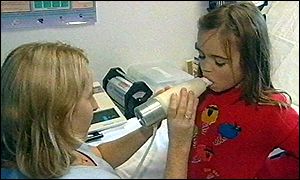 Asthma rates are high among children Nearly two thirds of parents are unaware of the potential side effects that may affect children given conventional asthma treatments, research suggests. And nine out of ten were unaware that there were alternatives to higher-dose inhaled steroid treatments.
Therefore, it is recommended that children are given the lowest dose of steroid possible. This can pose problems if low dose treatment proves ineffective. But there are also modern alternatives to increasing the dose of steroids that are known as "add-on therapy". These include a group of drugs known as leukotriene receptor agonists which work by reducing the effect of chemicals that cause inflammation of the airways. The researchers quizzed 573 GPs, nurses and parents of children who have asthma. They found:
Donna Covey, chief executive of the National Asthma Campaign, said: "We would encourage parents to discuss any concerns regarding their child's treatment with their GP or nurse. "In this way, parents can work in partnership with their GP or nurse to ensure that their child receives the best asthma care possible." | | See also:  18 Nov 02 | Health 17 Sep 02 | Health 22 Aug 02 | Health 15 Jun 99 | Medical notes Internet links: The BBC is not responsible for the content of external internet sites Top Health stories now: Links to more Health stories are at the foot of the page. | ||||||||||||||||||||||||||||||||||||||||||||||||||||||||||||||||||||||||||||||||||||||||||||||||||||||||||||||||||||||||||||||||||||||||
| |
|  E-mail this story to a friend E-mail this story to a friend |
| |
| Links to more Health stories |
| | | ||
 | ||||
 | | Back to top
| ||
| ---------------------------------------------------------------------------------- To BBC Sport>> | To BBC Weather>> | To BBC World Service>> ---------------------------------------------------------------------------------- © MMIII | News Sources | Privacy |





