|
 |
 | | | | | | ||||||||||||||||||||||||||||||||||||||||||||||||||||||||||||||||||||||||||||||||||||||||||||||||||||||||||||||||||||||||||||||||||||||||||||||||||||||||||||||||||||||||||||||||||||
| | | You are in: Health | ||||||||||||||||||||||||||||||||||||||||||||||||||||||||||||||||||||||||||||||||||||||||||||||||||||||||||||||||||||||||||||||||||||||||||||||||||||||||||||||||||||||||||||||||||||||
|
| | Thursday, 21 November, 2002, 00:01 GMT Warning over eye 'under-treatment'  Study raises concerns about standard practice One method used to correct children's short sight may not help them - and could actually do harm - research has suggested. The practice of "undercorrecting" short-sightedness, or myopia, is not recommended by optometry bodies as a way to deal with the problem, and leading members have hotly disputed it is carried out at all. But experts have told the BBC it has been used for decades when prescribing glasses or contact lenses. New Scientist magazine reports a study by a British optometrist who intended to confirm the practice works. But rather than prove the technique had merit, he was forced to cut short his work when it became apparent that children's eyes were actually getting worse.
Optometrist Professor Daniel O'Leary, of Anglia Polytechnic University in Cambridge, studied 94 children in Malaysia. The study was meant to run for three years, but was cut short after two years when it became clear that the children's eyesight was getting worse. Strong evidence
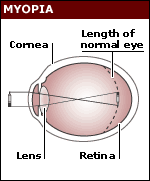
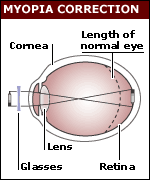
"It could change prescribing practice worldwide." Short-sightedness is caused by the inability of the muscles in the eye to flatten the lens enough to focus light from distant objects directly on to the retina. Instead, the point of focus is in front of the retina, leading to a blurred image. Glasses correct the problem by moving the focal point back onto the retina.
The theory is that to try to "refind" this focal point for near objects, their eyeballs actually elongate. Not only does this make distance vision even worse, it also increases the risk of serious eye diseases such as retinal detachment, glaucoma and retinopathy, all of which can lead to blindness. According to this theory, undercorrection should help stop the eyeball elongating. When they undercorrect, optometrists prescribe a lens that focuses light from distant objects just in front of the retina, rather than exactly on it. Theory
Professor O'Leary's team undercorrected the sight of half the children, and fully corrected the rest. Then they measured the length of the eyeball with ultrasound every six months. They found that the eyeball elongates faster when vision is undercorrected. As a result, the vision of the children with undercorrected short-sightedness deteriorated more rapidly. Professor O'Leary believes the eye cannot tell whether the focal point is in front of the retina or behind it. Instead, it just grows backwards if the image is out of focus. "No glasses is the worst option of all," he said. "But don't undercorrect. Go for full correction." Frank Munro, president of the College of Optometrists, told BBC News Online that the practice of undercorrection was no longer used. However, he said it had been employed by optometrists in the past. In an official statement, the College of Optometrists said: "The suggestion that optometrists have been routinely undercorrecting short-sightedness when prescribing glasses or contact lenses in the UK is incorrect. "It has never been accepted practice to undercorrect children or adults in this country." | |
See also:  03 Apr 02 | Health 23 May 01 | Health 28 Jun 02 | Health Internet links: The BBC is not responsible for the content of external internet sites Top Health stories now: Links to more Health stories are at the foot of the page. | ||||||||||||||||||||||||||||||||||||||||||||||||||||||||||||||||||||||||||||||||||||||||||||||||||||||||||||||||||||||||||||||||||||||||||||||||||||||||||||||||||||||||||||||||||||
| |
|  E-mail this story to a friend E-mail this story to a friend |
| |
| Links to more Health stories |
| | | ||
 | ||||
 | | Back to top
| ||
| ---------------------------------------------------------------------------------- To BBC Sport>> | To BBC Weather>> | To BBC World Service>> ---------------------------------------------------------------------------------- © MMIII | News Sources | Privacy |