
|
 |
 | | | | | | ||||||||||||||||||||||||||||||||||||||||||||||||||||||||||||||||||||||||||||||||||||||||||||||||||||||||||||||||||||||||||||||||||||||||
| | | You are in: Health | ||||||||||||||||||||||||||||||||||||||||||||||||||||||||||||||||||||||||||||||||||||||||||||||||||||||||||||||||||||||||||||||||||||||||||
|
| | Monday, 18 November, 2002, 00:00 GMT Natural pacemaker 'within 10 years' 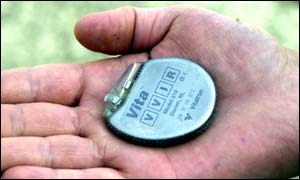 Pacemakers have been used for more than 40 years The days of the artificial pacemaker may soon be over for millions of people with serious heart problems. Scientists in the United States believe it may one day be possible to use a person's own body tissue to repair damage around the heart. Tests on rats suggest that implanting manipulated tissue back into the body could help people's hearts to beat regularly.
The pulse slows down if the electrical connections between the different chambers of the heart are damaged. This can occur as a result of disease or a heart attack. Pacemakers can restore a regular rhythm. Without them many people would die. Natural alternative But Douglas Cowan and colleagues at the Children's Hospital in Boston believe they may have found a more natural way to solve the problem. They extracted small amounts of muscle from rats to obtain myoblasts. These are immature cells which will grow into muscle. However, unlike normal muscle they can create the same proteins that heart muscle cells use to connect with one another to transmit the electronic signals that regulate the pulse. The scientists mixed this tissue with other cells and then transplanted it back into the rats. This engineered tissue, which was implanted into the rats' hearts, has rebuilt the connections between the different chambers of the heart. "The cells have survived in rats for more than a year and they appear to have made connections with cardiac cells," said Dr Cowan. Mores research needed "The electrical pathway developed within 10 weeks of implantation." Dr Cowan said further research is needed before they could even contemplate carrying out the procedure on humans. "We need rigorous, state-of-the-art experiments to confirm that the tissue is functioning and that the same can happen in larger animals." But he added: "Ultimately, maybe a decade down the road, we may be able to use such cell-based technologies in humans to free them from cardiac pacemaker devices." The findings were presented at the American Heart Association meeting in Chicago. | | See also:  12 Sep 02 | Health 12 Jul 02 | Wales 06 Apr 00 | Health Internet links: The BBC is not responsible for the content of external internet sites Top Health stories now: Links to more Health stories are at the foot of the page. | ||||||||||||||||||||||||||||||||||||||||||||||||||||||||||||||||||||||||||||||||||||||||||||||||||||||||||||||||||||||||||||||||||||||||
| |
|  E-mail this story to a friend E-mail this story to a friend |
| |
| Links to more Health stories |
| | | ||
 | ||||
 | | Back to top
| ||
| ---------------------------------------------------------------------------------- To BBC Sport>> | To BBC Weather>> | To BBC World Service>> ---------------------------------------------------------------------------------- © MMIII | News Sources | Privacy |





