|
 |
 | | | | | | |||||||||||||||||||||||||||||||||||||||||||||||||||||||||||||||||||||||||||||||||||||||||||||||||||||||||||||||||||||||||||||||||||||||||||||||||||||||
| | | You are in: Health | |||||||||||||||||||||||||||||||||||||||||||||||||||||||||||||||||||||||||||||||||||||||||||||||||||||||||||||||||||||||||||||||||||||||||||||||||||||||||
|
| | Friday, 15 November, 2002, 12:23 GMT Terror threat: NHS plans 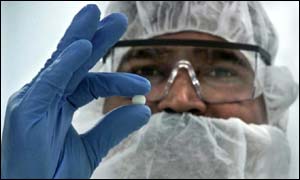 The NHS has stockpiled drugs and antibiotics NHS planning to deal with a major terrorist incident stepped up dramatically after 11 September 2001. In the past year, the Department of Health has carried out a comprehensive review of its emergency plans. It has issued extensive guidelines to hospital and ambulance trusts, health authorities, public health officials and GPs.
They cover a range of topics including how the NHS should deal with mass casualties. Advice has also been issued on how doctors should act if a lethal chemical or biological organism is deliberately released. This guidance relates to anthrax, plague, botulism, smallpox and nerve agents among others. Hospital trusts have also been advised to make sure their major incident plans are up to date and are regularly rehearsed. However, the National Audit Office report into emergency planning found flaws in the way guidelines are issued. Some hospital and ambulance trusts said they had not seen some key guidance. Antibiotics stockpiled The Department of Health also drew up plans to stockpile key antibiotics and antidotes to specific disease threats. According to Sir Liam Donaldson, chief medical officer for England, the government has secured 30m doses of smallpox vaccine.
In the meantime, the current supplies could be diluted to ensure that there is enough to go around. Officials have also obtained antibiotics to treat people infected with anthrax, plague or tularaemia - all potentially fatal. Supplies of emergency breathing equipment have also been stockpiled and are stored in key locations around the country. This will enable emergency workers to access them in the event of any attack. Protection equipment and decontamination facilities for NHS staff are in the process of being upgraded. Emergency teams Sir Liam has also overseen the appointment of nine specialist regional public health teams which would take a lead role in the event of any major attack. The Department of Health is now working to improve public awareness of the possible threats. A national poster campaign will be launched next year. The posters, to be displayed in public areas like the London Underground, will offer advice on how to act in the event of an attack. This will include tips such as running away from poison gas or using handkerchiefs as improvised masks. Department of Health officials are also planning to hold mock attacks to allow emergency services to test their procedures and ensure they are effective and up-to-date. Sir Liam is confident the government and the NHS is doing all it can to prepare for almost every possible eventuality. But even he concedes that it may not be possible to thwart determined terrorists or to protect the entire population all of the time. | |
See also:  15 Nov 02 | Health Internet links: The BBC is not responsible for the content of external internet sites Top Health stories now: Links to more Health stories are at the foot of the page. | |||||||||||||||||||||||||||||||||||||||||||||||||||||||||||||||||||||||||||||||||||||||||||||||||||||||||||||||||||||||||||||||||||||||||||||||||||||||
| |
|  E-mail this story to a friend E-mail this story to a friend |
| |
| Links to more Health stories |
| | | ||
 | ||||
 | | Back to top
| ||
| ---------------------------------------------------------------------------------- To BBC Sport>> | To BBC Weather>> | To BBC World Service>> ---------------------------------------------------------------------------------- © MMIII | News Sources | Privacy |