
|
 |
 | | | | | | ||||||||||||||||||||||||||||||||||||||||||||||||||||||||||||||||||||||||||||||||||||||||||||||||||||||||||||||||||||||||||||||||||||||||
| | | You are in: Health | ||||||||||||||||||||||||||||||||||||||||||||||||||||||||||||||||||||||||||||||||||||||||||||||||||||||||||||||||||||||||||||||||||||||||||
|
| | Sunday, 24 November, 2002, 00:18 GMT Hopes for better knee replacements 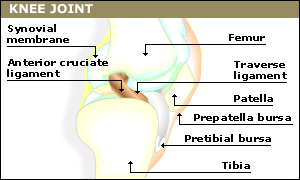 Knee replacements last about 15 years Scientists are hoping they could soon have a knee replacement designed to last. There are currently 35,000 knee replacement operations each year on arthritis patients But as the replacements only usually last about 15 years, patients often need further surgery. This has proved a particular problem among the under 60s,who may need more than one operation during their lifetime. Expensive It has also proved an expensive drain on the NHS. But now, a team at Southampton University are hopeful they could soon have a longer lasting knee replacement.
They plan to look at how the knee responds to everyday pressures, such as going up and down stairs. At the moment, the virtual tests concentrate on a limited range of activities, such as walking on the flat. Dr Mark Taylor, a lecturer in Southampton's bioengineering sciences research group, is carrying out the three-year study. "Currently, experimental methods only assess the wear of the artificial joint for a limited range of activities, such as walking on the flat. "But the knee is subjected to a much larger range of movements, such as going up and down stairs and getting in and out of a chair. "What we want to do is to develop simulations of wear in knee joint replacement which account for a range of activities and motion which are likely to be encountered in everyday life." Improvements "This will lead to improvements in implant design, which will have significant benefits for both patients, and the NHS. "For the patient it will mean their joint replacement lasts longer and generally improve their quality of life. "And for the health service a reduction in revision surgery will lead to substantial financial savings in the long term." A spokeswoman for the Arthritis Research Campaign (ARC), which is funding the �85,000 study, said: "Knee replacement surgery is now a commonly performed procedure, but it's important that techniques are constantly improved and we hope this work in Southampton will help us to do this." | | See also:  26 Oct 02 | Health 16 Oct 02 | Health 15 Oct 02 | Health 29 Sep 02 | Health 25 Sep 02 | Health Internet links: The BBC is not responsible for the content of external internet sites Top Health stories now: Links to more Health stories are at the foot of the page. | ||||||||||||||||||||||||||||||||||||||||||||||||||||||||||||||||||||||||||||||||||||||||||||||||||||||||||||||||||||||||||||||||||||||||
| |
|  E-mail this story to a friend E-mail this story to a friend |
| |
| Links to more Health stories |
| | | ||
 | ||||
 | | Back to top
| ||
| ---------------------------------------------------------------------------------- To BBC Sport>> | To BBC Weather>> | To BBC World Service>> ---------------------------------------------------------------------------------- © MMIII | News Sources | Privacy |





