
|
 |
 | | | | | | ||||||||||||||||||||||||||||||||||||||||||||||||||||||||||||||||||||||||||||||||||||||||||||||||||||||||||||||||||||||||||||||||||||||||
| | | You are in: Health | ||||||||||||||||||||||||||||||||||||||||||||||||||||||||||||||||||||||||||||||||||||||||||||||||||||||||||||||||||||||||||||||||||||||||||
|
| | Wednesday, 6 November, 2002, 01:25 GMT Herpes linked to cervical cancer 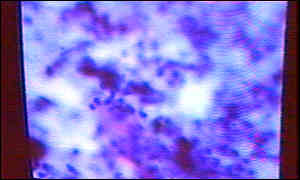 Around 3,200 women develop cervical cancer each year A common sexually transmitted disease could act as an "accomplice" in causing some cases of cervical cancer, experts have warned. Genital herpes appears to increase the risk of developing the cancer. It is already known that the human papillomavirus (HPV) causes most cases. But researchers are suggesting that genital herpes, herpes simplex virus-2 (HSV-2) could act in conjunction with HPV to increase a woman's risk.
Around 3,200 women are diagnosed with cervical cancer in the UK each year. Two-fold increase Blood and cervical specimens were examined from 1,260 women with cervical cancer and 1,110 without from seven countries. Scientists were looking for the presence of HPV DNA and HSV-2 antibodies, which show that someone has previously had the infection. HSV-2 antibodies were found in the blood of 44% of women who had suffered cancer, but just 25% of women who had not. The authors found HPV DNA in over 90% of women with cancer, but only 14% of those who did not. The researchers looked at the women's risk of developing two types of cervical cancer. Squamous-cell carcinoma is the most common form of cervical cancer. Squamous cells are the flat skin-like cells that cover the surface of the cervix. Adenocarcinoma affects the gland cells which produce mucus. It accounts for one in 20 cases of cervical cancer. Women who tested positive for HPV DNA and had a past infection with HSV-2 had a more than twofold increase in risk of squamous-cell carcinoma. They had a threefold increase in risk of adenocarcinoma carcinoma. Prevention The research was published in the Journal of the National Cancer Institute. Writing in the journal, the authors, led by Jennifer Smith, at the research for the International Agency for Research on Cancer, said: "Although HSV-2 infection may act in conjunction with HPV infection to increase the risk of invasive cervical cancer, the effect of HSV-2 infection on invasive cervical cancer risk is modest compared with the strong effect of HPV infection on invasive cervical cancer risk." Professor Jack Cuzick, of Cancer Research UK, told BBC News Online: "We know that HPV is the primary cause, but not everyone that gets HPV goes on to develop cancer. "There has been a lot of work on potential co-factors, particularly smoking and STDs. "This study provides some evidence that herpes might possibly be one of those things that interferes with the immune response." | | See also:  01 Aug 02 | Health 08 May 02 | Health 10 Apr 02 | Health 26 Mar 02 | Health 15 Jan 01 | Health Internet links: The BBC is not responsible for the content of external internet sites Top Health stories now: Links to more Health stories are at the foot of the page. | ||||||||||||||||||||||||||||||||||||||||||||||||||||||||||||||||||||||||||||||||||||||||||||||||||||||||||||||||||||||||||||||||||||||||
| |
|  E-mail this story to a friend E-mail this story to a friend |
| |
| Links to more Health stories |
| | | ||
 | ||||
 | | Back to top
| ||
| ---------------------------------------------------------------------------------- To BBC Sport>> | To BBC Weather>> | To BBC World Service>> ---------------------------------------------------------------------------------- © MMIII | News Sources | Privacy |





