
|
 |
 | | | | | | ||||||||||||||||||||||||||||||||||||||||||||||||||||||||||||||||||||||||||||||||||||||||||||||||||||||||||||||||||||||||||||||||||||||||||
| | | You are in: Health | ||||||||||||||||||||||||||||||||||||||||||||||||||||||||||||||||||||||||||||||||||||||||||||||||||||||||||||||||||||||||||||||||||||||||||||
|
| | Thursday, 31 October, 2002, 16:15 GMT Fresh questions over killer gas 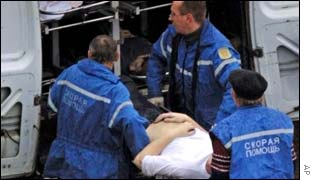 More than 100 civilians died The Russians have said that an opiate gas was used in the ending of the Moscow theatre siege - but some British experts remain unconvinced. More than 100 people died after the gas was pumped into the auditorium by special forces troops prior to their assault. At the moment, the finger is pointing at a drug based on fentanyl, used widely in the UK for the relief of cancer pain, and by anaesthetists during operations.
However, Professor Henry McQuay, an authority in pain relief at the Churchill Hospital in Oxford, told BBC News Online that he would expect the death toll to be far higher if this was indeed the drug. Dangerous game He said: "If you asked me to use fentanyl to incapacitate 700 people in a theatre, I wouldn't even know where to begin. "I don't know how you could possibly control the dose each person received, and there is a fine line between a safe dose that will knock someone out and a dose that will kill them. "I would have expected the death toll to be far higher - to get so many out alive is a fantastic achievement." The suspicion that an opiate drug was involved was heightened when some patients at the scene responded to the drug nalaxone - commonly given to patients who have overdosed on heroin. However, Professor McQuay said this reaction was no guarantee. He said anecdotal reports that many patients had died after choking on their own vomit suggested that they had simply been starved of oxygen - simply suffocating as air was displaced by the gas. "It's possible that this was a mixture of gases rather than just fentanyl." Mystery drugs Another possibility exists, he claimed.
Professor McQuay believes it possible that other types of fentanyl which never made into the market in the 1970s were researched further in Russia. "There were apocryphal stories about other types of fentanyl which disappeared off the radar in the mid-1970s. "Some of these fentanyls were supposed to be able to drop an elephant at 100 yards. "It is possible that these other fentanyls had more of an ability to incapitate without stopping breathing and killing the patient." He told BBC News Online that it would probably remain a mystery to researchers outside Russia. He said: "All our discussions on the subject raise more questions than they answer about this." | | See also:  30 Oct 02 | World 31 Oct 02 | Europe 31 Oct 02 | Health Internet links: The BBC is not responsible for the content of external internet sites Top Health stories now: Links to more Health stories are at the foot of the page. | ||||||||||||||||||||||||||||||||||||||||||||||||||||||||||||||||||||||||||||||||||||||||||||||||||||||||||||||||||||||||||||||||||||||||||
| |
|  E-mail this story to a friend E-mail this story to a friend |
| |
| Links to more Health stories |
| | | ||
 | ||||
 | | Back to top
| ||
| ---------------------------------------------------------------------------------- To BBC Sport>> | To BBC Weather>> | To BBC World Service>> ---------------------------------------------------------------------------------- © MMIII | News Sources | Privacy |





