
|
 |
 | | | | | | ||||||||||||||||||||||||||||||||||||||||||||||||||||||||||||||||||||||||||||||||||||||||||||||||||||||||||||||||||||||||||||||||||||||||||||||||||||||||||||||||||||||||||||||||||||||||||
| | | You are in: Health | ||||||||||||||||||||||||||||||||||||||||||||||||||||||||||||||||||||||||||||||||||||||||||||||||||||||||||||||||||||||||||||||||||||||||||||||||||||||||||||||||||||||||||||||||||||||||||||
|
| | Monday, 28 October, 2002, 10:27 GMT A&E targets not being met 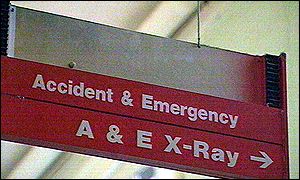 A shortage of beds means delays in A&E The government is painting an "overly optimistic" picture of A&E departments' success in cutting waiting times, according to the British Medical Association. The government wants all patients to spend less than four hours in A&E, and says 80% of patients are already admitted, transferred or discharged within that time. But a survey by the BMA found that in the preceding week:
The government claims that 24 hour waits have been eliminated. Over a third of consultants said the situation had deteriorated in the last year. Only a quarter said things had improved, usually because of increased staffing levels and better streaming of patients so those with, for example, minor conditions were assessed and treated separately. Bed shortage The 160 senior casualty doctors surveyed, who represent 40% of hospital departments in the UK, said the most common reason for delay was a lack of a bed elsewhere in the hospital for the patient to be transferred to. The BMA says increasing the number of beds available in hospitals by having an occupancy rate of less than 85% is the "single most important step" for improving waiting times in A&E. Having senior medical staff on duty in A&E to help prevent unnecessary admissions and improving community based care would also help, it says. The BMA highlighted hospitals where schemes in A&E had helped reduce waiting times.
'No quick-fixes' Don MacKechnie, chairman of the BMA's A&E subcommittee said: "It is heartening to see that so many doctors have been able to introduce new ways of working to help reduce waiting times for patients despite their departments being under considerable strain.
He said he was pleased the government had recognised that need for investment in emergency care. But he said: "I would urge against using gimmicks or quick-fixes. "A&E must have continued funding to allow new schemes to keep running and to give all departments the opportunity to introduce innovative ways of working." 'Unacceptable waits' Mr John Heyworth, president of the British Association for Accident and Emergency Medicine told the BBC: "Far too many patients are still waiting far too long." And he said the Department of Health was painting a "far rosier picture" than was evident to doctors and patients. He added: "Some progress has been made but, overall, this remains patchy and inconsistent. "These waits are unacceptable for patients and their relatives. The situation places intolerable pressures on medical and nursing staff working in emergency departments." Mr Heyworth welcomed the targets, which he said would be best for patients and staff, and would have an impact throughout the NHS. But he said: "The government may have underestimated the amount of work involved and time involved." A Department of Health spokeswoman said: "Three quarters of those who go to A&E department, who need to be admitted to hospital, get a bed within four hours. "Those aren't our figures - they're Audit Commission figures from 2000. By December 2004 all patients will be in and out of A&E within four hours." She added: "What's happening in A&E departments is the same as what's happening throughout the NHS; more investment and changes that should have been made years ago." Shadow Health Secretary Dr Liam Fox said: "The BMA has shown - yet again - that the gap between ministers' rhetoric and the reality of today's NHS is huge and growing." Dr Evan Harris MP, Liberal Democrat health spokesman, said: "Where patients face long waits for a bed after initial treatment, that is not the fault of the A & E department of the hospital or of the local health economy. "It's because of ministers' failure to ensure enough staffed beds and to tackle the outrage of widespread delayed discharges." | |
See also:  28 Oct 02 | Health 28 May 02 | Health 28 May 02 | Health 23 Oct 02 | Health 10 Sep 02 | Health 24 Feb 00 | Health Internet links: The BBC is not responsible for the content of external internet sites Top Health stories now: Links to more Health stories are at the foot of the page. | ||||||||||||||||||||||||||||||||||||||||||||||||||||||||||||||||||||||||||||||||||||||||||||||||||||||||||||||||||||||||||||||||||||||||||||||||||||||||||||||||||||||||||||||||||||||||||
| |
|  E-mail this story to a friend E-mail this story to a friend |
| |
| Links to more Health stories |
| | | ||
 | ||||
 | | Back to top
| ||
| ---------------------------------------------------------------------------------- To BBC Sport>> | To BBC Weather>> | To BBC World Service>> ---------------------------------------------------------------------------------- © MMIII | News Sources | Privacy  |







