
|
 |
 | | | | | | ||||||||||||||||||||||||||||||||||||||||||||||||||||||||||||||||||||||||||||||||||||||||||||||||||||||||||||||||||||||||||||||||||||||||||||||||||||||||||||||||||||||||||||||||
| | | You are in: Health | ||||||||||||||||||||||||||||||||||||||||||||||||||||||||||||||||||||||||||||||||||||||||||||||||||||||||||||||||||||||||||||||||||||||||||||||||||||||||||||||||||||||||||||||||||
|
| | Monday, 28 October, 2002, 00:24 GMT Doctors battling to meet A&E targets 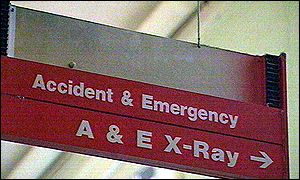 Patients will have to be seen in four hours by 2004 Casualty departments are struggling to meet government targets to speed up care for patients, doctors say. Their warning comes in advance of a British Medical Association study which is expected to question whether the government has accurately assessed how well targets are being met. A&E departments are expected to achieve a target of all patients being seen within four hours by 2004. The Department of Health estimates 80% of patients are already seen within that timescale, but the BMA is expected to cast doubt on the claim. Its report, to be published on Monday, is also expected to show that A&E departments are battling to introduce new services and reduce waiting times, despite the pressure they are under.
However he said: "There is a lot of work still required to get there by the time scale. "But they are best for patients, best for staff and will have an impact throughout the NHS. "The government may have underestimated the amount of work involved and time involved." Slow change He said pilot schemes around the country had showed that significant change could be achieved with relatively small investments of time, effort and money. But Dr Heyworth added that there was still a problem with ensuring patients were transferred from hospital to social or community care, and not blocking beds needed by acutely ill patients seen in A&E. "Things have been improving, and we're always optimistic, but the rate of change is slower than we would like it to be." 'Warehousing' Earlier this year, a snapshot survey of A&E departments by the Association of Community Health Councils of England and Wales (ACHCEW) found patients still endure long waits. The worst case was of a 90-year-old woman who waited for over 95 hours on a bed in casualty. Patients were being "warehoused" in assessment and observation units in casualty departments which are supposed to be used for patients who need to be monitored or have further tests before doctors decide whether they need to be admitted or discharged. But ACHCEW said some were being placed in the units simply because there was nowhere else to put them. Hospital managers disputed the claims and said the figures did not tell the whole story. | |
See also:  28 May 02 | Health 28 May 02 | Health 10 Sep 02 | Health 23 Oct 02 | Health 24 Feb 00 | Health Internet links: The BBC is not responsible for the content of external internet sites Top Health stories now: Links to more Health stories are at the foot of the page. | ||||||||||||||||||||||||||||||||||||||||||||||||||||||||||||||||||||||||||||||||||||||||||||||||||||||||||||||||||||||||||||||||||||||||||||||||||||||||||||||||||||||||||||||||
| |
|  E-mail this story to a friend E-mail this story to a friend |
| |
| Links to more Health stories |
| | | ||
 | ||||
 | | Back to top
| ||
| ---------------------------------------------------------------------------------- To BBC Sport>> | To BBC Weather>> | To BBC World Service>> ---------------------------------------------------------------------------------- © MMIII | News Sources | Privacy |






