
|
 |
 | | | | | | ||||||||||||||||||||||||||||||||||||||||||||||||||||||||||||||||||||||||||||||||||||||||||||||||||||||||||||||||||||||||||||||||||||||||
| | | You are in: Health | ||||||||||||||||||||||||||||||||||||||||||||||||||||||||||||||||||||||||||||||||||||||||||||||||||||||||||||||||||||||||||||||||||||||||||
|
| | Sunday, 20 October, 2002, 23:04 GMT 00:04 UK Gene therapy targets cystic fibrosis 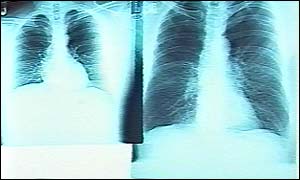 Cystic Fibrosis is caused by a single defective gene Scientists believe they may be able to overcome a natural body defence which is hindering gene therapy for cystic fibrosis. Thousands in the UK are battling the lung disease, which, without transplantation, can prove fatal before the age of 30. Gene therapy is one of the big hopes for future treatments, as a mutation in just one gene causes a malfunction within cells on the lung surface. The malfunction leads to overproduction of mucus, which clogs the lung and makes sufferers vulnerable to chronic infections.
However, trials of gene therapy have only had limited success so far, with the effects often proving short-lived. This is partly due to the natural defences of the lungs, which are primed to defend their surface against all sorts of allergens, dust particles, viruses and other foreign particles. This defence system proves pretty effective against the viruses used to deliver the new gene into cells. Keeping therapy working Now a team of researchers from the Women's and Children's Hospital in Adelaide, Australia, claim they have found a way of prolonging the effect of the treatment. As well as the therapy, they gave a dose of a detergent-like substance found naturally in the healthy lung. They believe this helps "condition" the surface of the lung and hold off the defence mechanism. So far, they have only tested their theory in the nasal passages of mice - which react in a similar way to the surfaces of the lungs. In their experiments, cells lining these airways not only responded to the gene therapy, but maintained that response - so far for 110 days. As nasal cells are generally replaced once every three months, this means it is possible that the change is appearing in newly-created cells as well as existing ones. Helpful HIV The team used a modified form of HIV to carry the therapy - it has been rendered incapable of causing an HIV infection, but can still enter cells and replace the key gene with a new, healthy sequence. Dr David Parsons, who led the research, said: "Airway cells are replaced every three months so our findings are particularly exciting because they imply we are in fact targeting airway stem cells through this approach. "Some of the therapeutic gene must have been passed on from these parent stem cells to their daughter cells for the effect to persist beyond three months." The next challenge is to take these successes and reproduce them in the lungs of real cystic fibrosis patients, and the Australian team is fine-tuning the technique so that human clinical trials can be started. | | See also:  07 Jan 02 | Health 09 Sep 02 | Health 10 Aug 02 | Health 27 Jul 02 | Health Internet links: The BBC is not responsible for the content of external internet sites Top Health stories now: Links to more Health stories are at the foot of the page. | ||||||||||||||||||||||||||||||||||||||||||||||||||||||||||||||||||||||||||||||||||||||||||||||||||||||||||||||||||||||||||||||||||||||||
| |
|  E-mail this story to a friend E-mail this story to a friend |
| |
| Links to more Health stories |
| | | ||
 | ||||
 | | Back to top
| ||
| ---------------------------------------------------------------------------------- To BBC Sport>> | To BBC Weather>> | To BBC World Service>> ---------------------------------------------------------------------------------- © MMIII | News Sources | Privacy |





