
|
 |
 | | | | | | ||||||||||||||||||||||||||||||||||||||||||||||||||||||||||||||||||||||||||||||||||||||||||||||||||||||||||||||||||||||||||||||||||||||
| | | You are in: Health | ||||||||||||||||||||||||||||||||||||||||||||||||||||||||||||||||||||||||||||||||||||||||||||||||||||||||||||||||||||||||||||||||||||||||
|
| | Thursday, 10 October, 2002, 04:21 GMT 05:21 UK Eczema patients lack 'natural antibiotic' 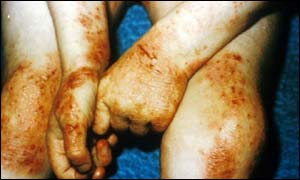 Severe eczema can be itchy and painful Patients with eczema may be lacking the ability to produce natural chemicals which fight bacterial infections, say scientists. Their research could open the door to new treatments incorporating antimicrobials for eczema sufferers. Studies in the US suggest that as many as one in nine people will suffer from eczema or eczema-like conditions at some point in their life. People with these problems - which may also be called atopic dermatitis - appear particularly susceptible to bacterial infections in the skin. The vast majority are colonised by bugs such as Staphylococcus aureus, and a third develop active infections as a result. The use of steroid creams in an effort to control eczema can lower immune responses and make it even easier for infections to thrive. Surface chemicals The latest study, by researchers at the National Jewish Medical and Research Center in Denver, has found that some of these patients seem to be lacking the ability to respond to infections in the normal way. People without eczema - and some with other skin conditions such as psoriasis - were tested to see which chemicals were present on the surface. In particular, they looked for levels of two short proteins or peptides known to have antimicrobial qualities, called LL-37 and HBD-2. It is normally released in response to skin inflammation. Not present Psoriasis patients rarely suffer skin infections, and the checks revealed high levels of the peptides. However, both the eczema-free control patients, and the eczema patients had little or none of the peptides. When Staphylococcus aureus colonies in the test tube were tested with levels of the peptides similar to those found in psoriasis patients, the bacteria died. While the reason for the missing peptides in eczema patients is not entirely clear, the researchers suggested that two immune hormones secreted by their skin cells, IL-4 and IL-13 suppressed the production of at least one of the peptides. Lead researcher Dr Donald Leung said: "It is important to understand why people with this common skin condition are so susceptible to skin infections, especially in the light of recent widespread concerns that they can develop severe infections after receiving a smallpox vaccination." He added: "These findings indicate that atopic dermatitis patients have an impaired immune response that prevent them from producing adequate amounts of antimicrobial peptides in their skin." He suggested that future treatments might incorporate the peptides - which have the additional advantage of being able to target viruses, fungi as well as bacteria. | | See also:  27 Jan 99 | Health 15 May 00 | Health 08 May 02 | Health 24 Sep 02 | England Internet links: The BBC is not responsible for the content of external internet sites Top Health stories now: Links to more Health stories are at the foot of the page. | ||||||||||||||||||||||||||||||||||||||||||||||||||||||||||||||||||||||||||||||||||||||||||||||||||||||||||||||||||||||||||||||||||||||
| |
|  E-mail this story to a friend E-mail this story to a friend |
| |
| Links to more Health stories |
| | | ||
 | ||||
 | | Back to top
| ||
| ---------------------------------------------------------------------------------- To BBC Sport>> | To BBC Weather>> | To BBC World Service>> ---------------------------------------------------------------------------------- © MMIII | News Sources | Privacy |



