
|
 |
 | | | | | | ||||||||||||||||||||||||||||||||||||||||||||||||||||||||||||||||||||||||||||||||||||||||||||||||||||||||||||||||||||||||||||||||||||||||||
| | | You are in: Health | ||||||||||||||||||||||||||||||||||||||||||||||||||||||||||||||||||||||||||||||||||||||||||||||||||||||||||||||||||||||||||||||||||||||||||||
|
| | Thursday, 10 October, 2002, 23:34 GMT 00:34 UK Students shun medicine courses 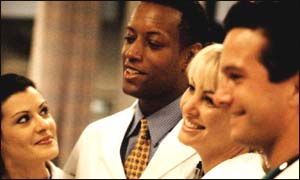 Ministers want more people to train as doctors Medical schools may be unable to fill places in just a few years' time because of a lack of interest from students, according to a study. Research published in the British Medical Journal suggests the supply of students will fail to meet demand after 2005. The prediction follows a steady fall in applications from school-leavers to study medicine in recent years.
The government has pledged to train an extra 1,000 medical students each year by 2005. The move is part of efforts to tackle the shortage of doctors across the UK. Applications down But figures from the Universities and Colleges Admission Services show that applications have fallen substantially since 1995. Seven years ago 9,192 school leavers applied to study medicine. By 2000 that had fallen 8,108 - a drop of 12%. Chris McManus, professor of psychology and medical education at University College London, said that even if this fall is halted and applications remain at the same level supply of students will barely meet demand by 2005. It also suggests that if applications fall some medical schools may have difficulty filling places. Writing in the BMJ, Professor McManus said: "Medicine undoubtedly has a problem - soon, the applicants for an expanding number of medical school places may be too few." One of the solutions put forward has been for universities to accept students with lower grades onto medicine courses.
"Lowering entry requirements runs the short term risk of increased numbers of students dropping out of medical schools or the longer term risk of less qualified medical entrants becoming less competent doctors." He suggested that the impending shortage was linked to the fact that students are failing to study science subjects at school. This means many students are uninterested or unable to apply to study medicine. Urgent action Professor McManus called on the government to tackle this problem. "The increasingly urgent solution for that will have to come from the Department for Education and Skills." Information on the number of students who applied to study medicine this year is not yet available. However, figures published this week show that the number of people accepted onto degree courses increased by 11%. Professor Robert Boyd, chairman of the Council of Heads of Medical Schools (CHMS), said this increase was higher than expected and suggested that more students had applied. "We had a serious concern across the sector until this year," he told BBC News Online. "The numbers applying for medical school have gradually declined over the past few years. But there has been a big change this year. "This year's data suggests at least in the short term that the concern is misplaced. We hope the improvements will continue." He added: "It may be that discussions of increasing medical school places and extra funding for the NHS affected young people's decisions." | | See also:  10 Sep 02 | Health 23 Jul 98 | Health 03 Nov 00 | Health Internet links: The BBC is not responsible for the content of external internet sites Top Health stories now: Links to more Health stories are at the foot of the page. | ||||||||||||||||||||||||||||||||||||||||||||||||||||||||||||||||||||||||||||||||||||||||||||||||||||||||||||||||||||||||||||||||||||||||||
| |
|  E-mail this story to a friend E-mail this story to a friend |
| |
| Links to more Health stories |
| | | ||
 | ||||
 | | Back to top
| ||
| ---------------------------------------------------------------------------------- To BBC Sport>> | To BBC Weather>> | To BBC World Service>> ---------------------------------------------------------------------------------- © MMIII | News Sources | Privacy |





