
|
 |
 | | | | | | ||||||||||||||||||||||||||||||||||||||||||||||||||||||||||||||||||||||||||||||||||||||||||||||||||||||||||||||||||||||||||||||||||||||||
| | | You are in: Health | ||||||||||||||||||||||||||||||||||||||||||||||||||||||||||||||||||||||||||||||||||||||||||||||||||||||||||||||||||||||||||||||||||||||||||
|
| | Thursday, 10 October, 2002, 05:02 GMT 06:02 UK Older lung cancer drug 'more effective' 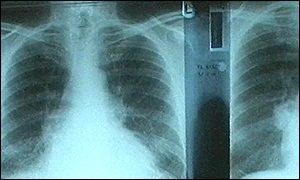 Patients with advanced lung cancer were studied Scientists have discovered that an older treatment for an advanced form of lung cancer is better than a newer drug. But experts say though there is a slight advantage to using the older drug, the research highlights the need for a much more effective drug. European researchers compared the older treatment cisplatin with carboplatin in over 600 patients with advanced non small-cell lung cancer. Patients received one of the two drugs in combination with the chemotherapy drug paclitaxel.
In Europe, including the UK, patients are already given cisplatin, while in the US, doctors usually choose to use carboplatin. The newer drug was developed because cisplatin is very toxic, and patients need to stay in hospital for several hours or even overnight, so they can have the drug washed through their kidneys using intravenous fluids. Survival rates The study, published in the journal Annals of Oncology, found around a quarter of both groups responded to their treatment. But, on average, those who were taking cisplatin and paclitaxel survived for 9.8 months, compared to 8.5 months in those taking carboplatin. Thirty-eight per cent of those in the cisplatin group, compared with 33% of those on carboplatin, survived for a year. After two years, the survival rates were 15% and 9% respectively. The findings are in contrast to a recent US study which found no difference between the two drugs. Dr Rafael Rosell from the Hospital Germans Trias i Pujol in Barcelona, Spain, who led the research, said the findings suggested cisplatin-based chemotherapy should be the first treatment option, although paclitaxel and carboplatin was still a viable alternative. Writing in the journal, Dr Thierry Le Chevalier of the Institute Gustave Roussy in Villejuif Cedex, France, said the research was important. But he said new medications were needed: "New treatment strategies are needed to overcome the limits of conventional chemotherapy." 'Magic bullet' Dr John Harvey, a spokesman for the British Thoracic Society, told BBC News Online: "This study tends to support that we're using the right combination of chemotherapy drugs for patients with non-small cell lung cancer. "The difficulty is that, although the differences between the drugs are significant, they are small - and after two years, you are down to a very small number of patients." Dr Harvey, a lung specialist at Bristol's Southmead Hospital, added: "What this really shows is that we need a completely new agent, a "magic bullet" that targets cancer DNA in addition to using chemotherapy." Stephen Spiro, spokesman for the British Lung Foundation, and professor of thoracic medicine at University College Hospital London, added: "We have reached an absolute limit of eight to 10 months average survival for advanced cancers. "We need much, much better drugs." | | See also:  01 Oct 02 | Health 05 Apr 02 | Health 27 Oct 02 | Health 15 Feb 02 | Health 12 Jun 01 | Health Internet links: The BBC is not responsible for the content of external internet sites Top Health stories now: Links to more Health stories are at the foot of the page. | ||||||||||||||||||||||||||||||||||||||||||||||||||||||||||||||||||||||||||||||||||||||||||||||||||||||||||||||||||||||||||||||||||||||||
| |
|  E-mail this story to a friend E-mail this story to a friend |
| |
| Links to more Health stories |
| | | ||
 | ||||
 | | Back to top
| ||
| ---------------------------------------------------------------------------------- To BBC Sport>> | To BBC Weather>> | To BBC World Service>> ---------------------------------------------------------------------------------- © MMIII | News Sources | Privacy |





