|
 |
 | | | | | | |||||||||||||||||||||||||||||||||||||||||||||||||||||||||||||||||||||||||||||||||||||||||||||||||||||||||||||||||||||||||||||||||||||||||
| | | You are in: Health | |||||||||||||||||||||||||||||||||||||||||||||||||||||||||||||||||||||||||||||||||||||||||||||||||||||||||||||||||||||||||||||||||||||||||||
|
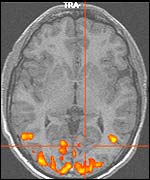
| | Monday, 7 October, 2002, 23:02 GMT 00:02 UK Eye disease scan 'lights up brain' 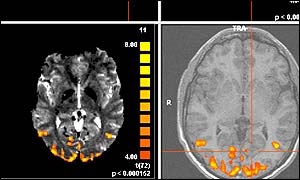 Brain scans showing activity when people see Scientists are hoping to discover more about eye diseases by "lighting up the brain". The team from the University of Leicester hope that using a special scanning technique will allow them to see exactly what happens in the brains of patients suffering from such diseases. Magnetic Resonance Imaging (MRI) is already used to detect abnormalities in the brain such as tumours.
fMRI allows researchers to see changes in blood flow in the brain that accompany brain activity. This means scientists can see which parts of the brain become active, or "light up", as people look at different pictures and patterns. Control They hope the technique will help them what happens to the brain in people with common eye problems such as "blind spots", where people have missing parts of their peripheral vision, perhaps due to glaucoma. Often, people are unaware of these blind spots, so they fail to recognise their symptoms and are treated too late.
This means some people see a continually moving world, but for others things appear normal and stationary. Professor Irene Gottlob, who is head of ophthalmology at the University of Leicester, said: "Although it may seem obvious that we "see" with our eyes - it is the brain that analyses what our eyes see and controls how our eyes move. "Understanding how the brain works in conjunction with the eyes is an important step to fully understanding what happens in eye diseases." She added: "A large part of the brain is involved in processing the information from what the eye sees but also is responsible for controlling the movement of the eye. The research is being funded by the Ulverscroft Foundation, a charity which funds production of large print books for visually impaired people. Anita Lightstone, head of low vision and prevention at the Royal National Institute for the Blind told BBC News Online: "This type of analysis will allow a much greater understanding of how we interpret the information received from the eye and we fully support research that enables a better understanding of how the eye and brain function." | | See also:  10 Jul 02 | Health 13 Jun 02 | Health 15 May 02 | Health 27 Nov 01 | Health 23 May 00 | Health Internet links: The BBC is not responsible for the content of external internet sites Top Health stories now: Links to more Health stories are at the foot of the page. | |||||||||||||||||||||||||||||||||||||||||||||||||||||||||||||||||||||||||||||||||||||||||||||||||||||||||||||||||||||||||||||||||||||||||
| |
|  E-mail this story to a friend E-mail this story to a friend |
| |
| Links to more Health stories |
| | | ||
 | ||||
 | | Back to top
| ||
| ---------------------------------------------------------------------------------- To BBC Sport>> | To BBC Weather>> | To BBC World Service>> ---------------------------------------------------------------------------------- © MMIII | News Sources | Privacy |