|
 |
 | | | | | | |||||||||||||||||||||||||||||||||||||||||||||||||||||||||||||||||||||||||||||||||||||||||||||||||||||||||||||||||||||||||||||||||||||||||
| | | You are in: Health | |||||||||||||||||||||||||||||||||||||||||||||||||||||||||||||||||||||||||||||||||||||||||||||||||||||||||||||||||||||||||||||||||||||||||||
|
| | Friday, 4 October, 2002, 16:04 GMT 17:04 UK Cream holds off worm infection 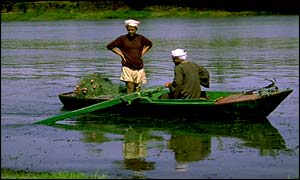 Infection occurs through contaminated water Scientists have developed a cream which could help control a disease which affects around 200m people around the world. Bilharzia is caused by the larvae of parasitic worms found in contaminated water which penetrate the skin. Over 20m people are severely affected by Bilharzia. It is the second most prevalent parasitic infection in the world after malaria. There are effective drugs which can control the infection, but the barrier cream, developed by researchers at King's College London, may help prevent re-infection.
Researchers used human skin from plastic surgery patients, to test the barrier cream which was developed using techniques originally developed to study the movement of drugs across the skin. It was found a single application stopped more than 95% of the worms from penetrating the skin, offering protection for at least 48 hours. Paralysis Bilharzia is present in 74 countries worldwide including Egypt, Sudan and northeast Brazil, but Sub-Saharan Africa is worst affected. People become infected when their skin comes in contact with contaminated water which contains water snails carrying tiny parasitic larvae, or cercariae. These then penetrate the skin, growing and developing into adult worms which live in the blood vessels of the gut or the bladder where they produce eggs. Some of these eggs pass into the urine or faeces and fresh water becomes contaminated by eggs when infected people urinate or defecate in the water.
But eggs can also travel around the body, and repeated infections can lead to damage to the liver, intestines, lungs and bladder. Sometimes, they can travel to the brain or spinal cord and can cause seizures, paralysis, or spinal cord inflammation. Children are at particular risk of Bilharzia because they play in water which contains the water snails carrying the skin-penetrating larvae, or cercariae. Infected children may not develop properly, and can do poorly at school. Adults with the infection may find it difficult to work because of weakness and lethargy. 'Controlling the threat Professor Phil Whitfield, head of the School of Health and Life Sciences at King's who was part of the research team, said: "This is exciting research that may help in alleviating the suffering from a disease that affects millions of people in some of the poorest countries around the world. He added: "The discovery that this cream gives significant protection against Bilharzia by breaking the life cycle is a useful step toward controlling the threat of the disease in those parts of the world where it poses a major health hazard." But he admitted the cream was not a cure on its own. He said it would have to be used in conjunction with drugs, controlling the snails that pass on the worms into the water and improving sanitation and health education." The researchers said travellers could also benefit from the cream as an additional form of protection from infection. Dr Ian Marshall, senior lecturer in parasitology at Liverpool's School of Hygiene and Tropical Medicine, told BBC News Online said the cream was an interesting development. But he added: "It's a huge step from carrying out experiments on carefully cultured skin cells to using it on people." And he added: "You only need to miss a tiny bit, and it's possible that the cercariae are going to get in. "However, it might reduce the risk somewhat, but I wouldn't like to say how much." The research is published in the Journal of Parasitology. | | See also:  09 Mar 00 | Middle East 31 Oct 00 | Health 15 Sep 02 | Health Internet links: The BBC is not responsible for the content of external internet sites Top Health stories now: Links to more Health stories are at the foot of the page. | |||||||||||||||||||||||||||||||||||||||||||||||||||||||||||||||||||||||||||||||||||||||||||||||||||||||||||||||||||||||||||||||||||||||||
| |
|  E-mail this story to a friend E-mail this story to a friend |
| |
| Links to more Health stories |
| | | ||
 | ||||
 | | Back to top
| ||
| ---------------------------------------------------------------------------------- To BBC Sport>> | To BBC Weather>> | To BBC World Service>> ---------------------------------------------------------------------------------- © MMIII | News Sources | Privacy |