|
 |
 | | | | | | |||||||||||||||||||||||||||||||||||||||||||||||||||||||||||||||||||||||||||||||||||||||||||||||||||||||||||||||||||||||||||||||||||||||||
| | | You are in: Health | |||||||||||||||||||||||||||||||||||||||||||||||||||||||||||||||||||||||||||||||||||||||||||||||||||||||||||||||||||||||||||||||||||||||||||
|
| | Thursday, 3 October, 2002, 17:29 GMT 18:29 UK Robot helps out with knee surgery 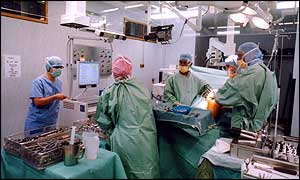 Human surgeons were joined by a robot in the op Surgeons at a UK hospital have used a robot to help them carry out complex knee surgery. Doctors at Epsom and St Helier Hospital NHS Trust in Carshalton, Surrey, used a mini-robot and computer navigation system during the operation to replace a knee joint. Knee replacements have to be aligned very accurately to prevent them wearing out too quickly. At the moment, surgeons have to rely on their eyesight to position the prosthesis or replacement accurately, with the help of CT scans.
This allows it to make precise cuts into the bone, far more accurately than a surgeon using his eyesight could be. The patient also avoids the need for an x-ray. The robot, eight inches square, made by Precision Instrument Systems, Zurich, Switzerland, is placed on top of the patient's thigh bone and moves around placing the cuts on the patient's bones, guided by the computer. Accuracy Orthopaedic surgeon, Mr Ajeya Adhikari, who carried out the operation, told BBC News Online: "Using the mini-robot and computer navigation is far more accurate than a surgeon alone.
"The computer navigation system helps align the knee joint in its natural position. "Both combined help position the replacement joint more accurately, which affects the longevity of the joint as pressure is equally applied throughout all points. "If the joint is not positioned properly, the pressure might be too much on one part." Mr Adhikari added: "This is an exciting and ground-breaking operation: we are combining the best elements of technology and human ability. "In five years time, I believe all knee replacements will be done in this way." The hospital will be a centre for other hospitals and surgeons to see how the mini-robot works. Looking forward The patient, Mrs Jeannine Tait, 73, of Raynes Park, said: "I feel quite privileged to be the first person in the UK to have this new knee operation with the mini-robot. "I was quite an active person before the problem with my knee and I am looking forward to being more mobile again. "I miss using the tube and I am very keen to take up line-dancing to keep me fit." | | See also:  28 Aug 02 | England 05 Sep 01 | Health 09 Aug 01 | Health 05 Jun 01 | Health 12 Mar 00 | Health Internet links: The BBC is not responsible for the content of external internet sites Top Health stories now: Links to more Health stories are at the foot of the page. | |||||||||||||||||||||||||||||||||||||||||||||||||||||||||||||||||||||||||||||||||||||||||||||||||||||||||||||||||||||||||||||||||||||||||
| |
|  E-mail this story to a friend E-mail this story to a friend |
| |
| Links to more Health stories |
| | | ||
 | ||||
 | | Back to top
| ||
| ---------------------------------------------------------------------------------- To BBC Sport>> | To BBC Weather>> | To BBC World Service>> ---------------------------------------------------------------------------------- © MMIII | News Sources | Privacy |