
|
 |
 | | | | | | ||||||||||||||||||||||||||||||||||||||||||||||||||||||||||||||||||||||||||||||||||||||||||||||||||||||||||||||||||||||||||||||||||||||||
| | | You are in: Health | ||||||||||||||||||||||||||||||||||||||||||||||||||||||||||||||||||||||||||||||||||||||||||||||||||||||||||||||||||||||||||||||||||||||||||
|
| | Tuesday, 1 October, 2002, 10:14 GMT 11:14 UK Cancer care changes urged 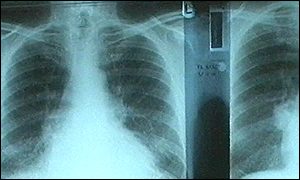 Deaths from lung cancer are falling in the UK The lives of thousands of lung cancer patients could be saved each year if doctors made simple changes to their radiotherapy programmes, a study suggests. Doctors from Cancer Research UK believe that giving patients higher doses of radiotherapy over a longer period with a break at weekends could boost survival rates. Their study found that this regime is more effective at fighting cancer tumours than current programmes.
Under conventional radiotherapy programmes, patients with lung cancer receive a daily dose of radiation five days a week over five or six weeks. NHS problems Under the gold standard regime, known as CHART, patients receive three doses of radiation a day for 12 consecutive days. However, this programme is only available in a handful of NHS hospitals partly because of a shortage of staff. But doctors at the Mount Vernon Cancer Centre in London believe they may have found a way around this problem while also boosting survival rates. Their programme involves giving patients higher doses of radiotherapy over 18 days. However, patients are given weekends off to enable them to recover. Professor Michele Saunders who devised the programme said it improved tumour control by 19% under CHART to 33%. Overall, 55% of patients who were treated in this way went into remission. However, that figure jumped to 72% if the programme was combined with chemotherapy. The regime was devised using computer models. However, small scale trials have produced the same results. Professor Saunders said the programme, referred to as CHARTWEL (CHART Week-End-Less), could also help the NHS to overcome staff shortages. Radiographers are only allowed to work 36 hours a week and there is a severe shortage of qualified personnel especially at weekends. Save lives Prof Saunders said the improved remission rates could save thousands of lives if the programme was adopted across Europe. "Our studies were small but the results indicate that while the CHARTWEL radiotherapy and chemotherapy combination may not lead to dramatic improvement in survival rates for patients with non small cell lung cancer, the small improvements it does show could translate into substantial gain with thousands of patients surviving five years or more per year in Europe," she said. "It is clear that there is now a need for randomised clinical trials to take the work forward and, if successful, make the treatment available throughout the country." Sir Paul Nurse, chief executive of Cancer Research UK, welcomed the findings. "The proven effectiveness of CHART and the prospective success of CHARTWEL shows we are on the right track when looking at improved ways of treating lung cancer patients. "If we are able to introduce treatment regimes which have a secondary benefit to our already overstretched health service then that is a welcome bonus," he said. | | See also:  12 Mar 02 | Health 03 Jul 02 | Health 25 Oct 02 | Health 21 Nov 01 | Health Internet links: The BBC is not responsible for the content of external internet sites Top Health stories now: Links to more Health stories are at the foot of the page. | ||||||||||||||||||||||||||||||||||||||||||||||||||||||||||||||||||||||||||||||||||||||||||||||||||||||||||||||||||||||||||||||||||||||||
| |
|  E-mail this story to a friend E-mail this story to a friend |
| |
| Links to more Health stories |
| | | ||
 | ||||
 | | Back to top
| ||
| ---------------------------------------------------------------------------------- To BBC Sport>> | To BBC Weather>> | To BBC World Service>> ---------------------------------------------------------------------------------- © MMIII | News Sources | Privacy |





